Search the site
Search
Grammar ▾
▸ Articles
▸ Advanced Grammar
▸ Adjectives & Adverbs
▸ Conjunctions
▸ Conditionals
▸ Determiners
▸ Gerunds & Infinitives
▸ Grammar Practice
▸ Modal Verbs
▸ Nouns
▸ Parts of Speech
▸ Prepositions
▸ Pronouns
▸ Quantifiers
▸ Question Formation
▸ Reported Speech
▸ Verbs
Writing ▾
▸ Punctuation
▸ Sentence Structure
▸ Writing Mistakes
Vocabulary ▾
▸ Visual Vocabulary
▸ Food Vocabulary
▸ People Vocabulary
▸ Places Vocabulary
▸ Hobbies Vocabulary
▸ Home Vocabulary
▸ School Vocabulary
▸ Weather Vocabulary
▸ Basic Vocabulary
▸ General Vocabulary
Speaking ▾
▸ Conversational English
Calculators
Contacts
Home
»
English
»
Grammar
Grammar
This section focuses on English grammar explained in a simple and practical way. You will find clear rules, step-by-step examples, and common mistakes to avoid, helping you build a strong foundation for speaking and writing confidently.
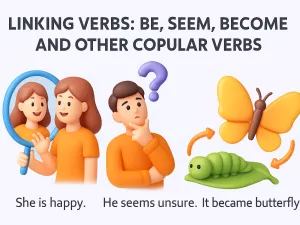
Linking Verbs: Be, Seem, Become and Other Copular Verbs
The article explains how linking verbs connect subjects to descriptions or identities, compares them with action verbs, lists common examples, discusses subject complements and sense verbs, highlights common mistakes, gives style advice, and includes practice exercises.
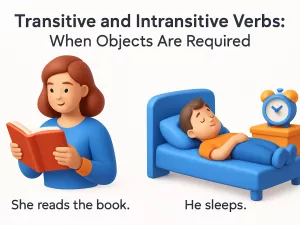
Transitive and Intransitive Verbs: When Objects Are Required
Here we what transitive and intransitive verbs mean, how to recognize direct objects, common verb patterns, verbs that can be both types, frequent learner mistakes, dictionary labels, and includes practice exercises.
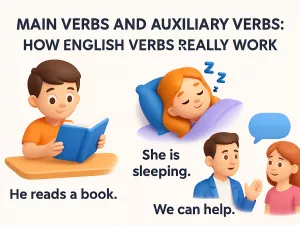
Main Verbs and Auxiliary Verbs: How English Verbs Really Work
Here we the difference between main and auxiliary verbs, how auxiliaries like be, have, do, and modals create tense, aspect, and voice, their use in questions and negatives, common mistakes, and offers exercises to practice main versus auxiliary verbs.
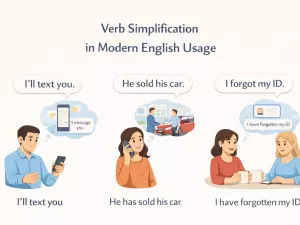
Verb Simplification in Modern English Usage
Here we how verbs are simplified in modern English, highlighting common patterns, tense and aspect changes, and simpler alternatives to complex forms. It also covers spoken English’s influence on writing, acceptability, and practical tips for learners.
How Native Speakers Choose Verb Forms in Real Speech
This article explains how verb choices in real conversations are shaped by context, time words, and storytelling. It covers shortcuts in speech, the impact of modality and register, common learner issues, and offers listening-based practice tasks.
Unreal Past Forms: If I Were, I Wish, It’s Time
The article explains what unreal past means in English and how it’s used in if-clauses, wish and if only structures, and it’s time patterns. It also discusses was vs were, common mistakes, differences from past simple, and provides practice exercises.
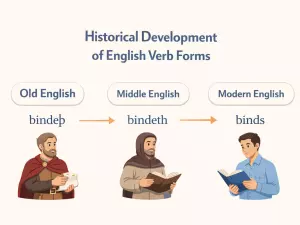
Historical Development of English Verb Forms
Here we how English verb forms evolved, covering the transition from Old to Modern English, the simplification of endings and agreement, changes in tense and aspect, the rise of auxiliaries, and how irregular verbs persisted.
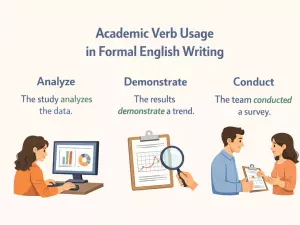
Academic Verb Usage in Formal English Writing
Here we how to choose academic-sounding verbs, including hedging for cautious claims, describing methods and results, avoiding vague verbs, and recognizing common errors. It also provides practice tasks for improving formal verb use.
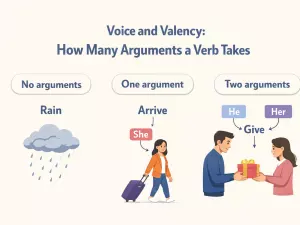
Voice and Valency: How Many Arguments a Verb Takes
Here we what valency means in grammar, explains intransitive, transitive, and ditransitive verbs, discusses how valency affects sentence structure and passive voice, and highlights common learner errors and practice exercises.
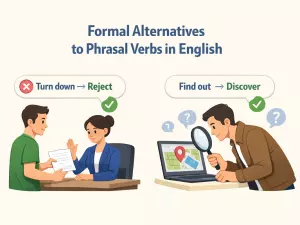
Formal Alternatives to Phrasal Verbs in English
Here we why phrasal verbs are considered informal, provides formal alternatives, and explains their use in academic and professional writing. It also covers style differences, common mistakes, replacement strategies, and includes practice exercises.
Previous
1
...
16
17
18
19
20
21
22
23
24
...
124
Next