Search the site
Search
Grammar ▾
▸ Articles
▸ Advanced Grammar
▸ Adjectives & Adverbs
▸ Conjunctions
▸ Conditionals
▸ Determiners
▸ Gerunds & Infinitives
▸ Grammar Practice
▸ Modal Verbs
▸ Nouns
▸ Parts of Speech
▸ Prepositions
▸ Pronouns
▸ Quantifiers
▸ Question Formation
▸ Reported Speech
▸ Verbs
Writing ▾
▸ Punctuation
▸ Sentence Structure
▸ Writing Mistakes
Vocabulary ▾
▸ Visual Vocabulary
▸ Food Vocabulary
▸ People Vocabulary
▸ Places Vocabulary
▸ Hobbies Vocabulary
▸ Home Vocabulary
▸ School Vocabulary
▸ Weather Vocabulary
▸ Basic Vocabulary
▸ General Vocabulary
Speaking ▾
▸ Conversational English
Calculators
Contacts
Home
»
English
»
Grammar
Grammar
This section focuses on English grammar explained in a simple and practical way. You will find clear rules, step-by-step examples, and common mistakes to avoid, helping you build a strong foundation for speaking and writing confidently.
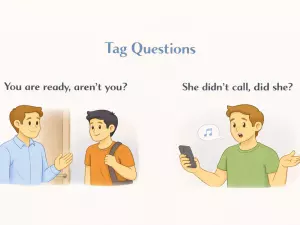
Tag Questions in English: Structure and Intonation
This article explains what tag questions are, their basic structure, and how positive and negative forms work. It covers intonation, using modals and imperatives, common mistakes, and includes practice exercises for self-assessment.
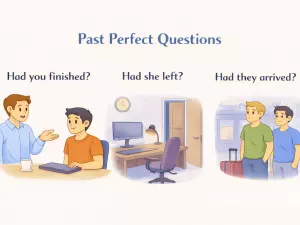
How to Form Questions in the Past Perfect Tense
Here we how to form past perfect questions, including the use of had, yes/no and WH-questions, and differences from past simple. It also discusses typical contexts, common mistakes, and provides practice exercises for self-check.
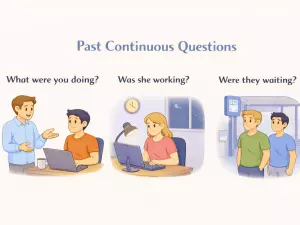
How to Form Questions in the Past Continuous Tense
Here we forming past continuous questions, choosing was or were, making yes/no and WH-questions, using time markers, and avoiding common mistakes. It also compares past continuous with past simple and offers practice exercises for self-check.
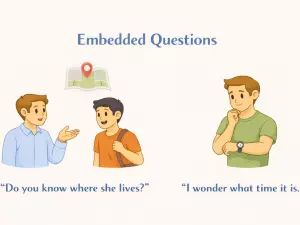
Embedded Questions in English Statements Explained
This article explains what embedded questions are, how they differ from direct questions, and the correct word order. It also covers embedded yes/no and WH-questions, reporting verbs, common mistakes, and practice exercises.
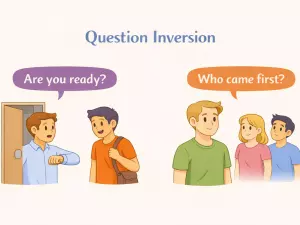
Inversion in English Questions: Rules and Exceptions
Here we what inversion in questions means, standard rules, how to use inversion with auxiliary, be, and modal verbs, cases without inversion, exceptions, and common word order mistakes. It also provides practice exercises for self-assessment.
Subject vs Object Questions in English Explained
The article defines subject and object questions, compares their word order and auxiliary verb use, explains WH-word roles, covers common learner mistakes, offers tips to identify question types, and includes practice exercises for self-check.
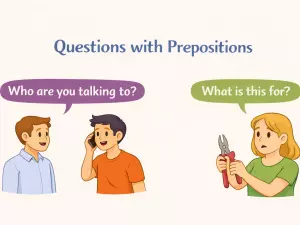
Question Formation with Prepositions in English
This article explains how prepositions work with question words in English. It covers prepositions before and after WH-words, formal and informal usage, common mistakes, natural spoken patterns, and includes practice exercises.
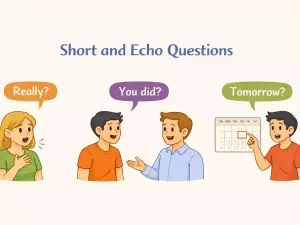
Short Questions and Echo Questions in Conversation
Here we the definitions and spoken formation of short and echo questions, their use for expressing surprise or interest, intonation patterns, common learner mistakes, and offers practice exercises for self-assessment.
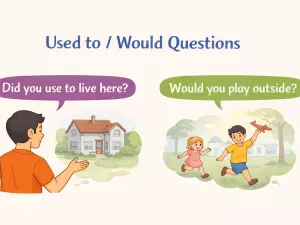
Questions with Used to and Would in English
Here we the meanings of used to and would, how to form questions with both, and their differences in questions. It also discusses time references, common mistakes, spoken vs written usage, and provides practice exercises.
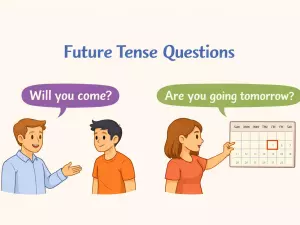
How to Form Questions in Future Tenses in English
This article explains how to ask future questions in English using will, going to, and present continuous forms. It covers when to use each, common mistakes, real-life examples, and offers practice exercises for self-assessment.
Previous
1
...
23
24
25
26
27
28
29
30
31
...
124
Next