Search the site
Search
Grammar ▾
▸ Articles
▸ Advanced Grammar
▸ Adjectives & Adverbs
▸ Conjunctions
▸ Conditionals
▸ Determiners
▸ Gerunds & Infinitives
▸ Grammar Practice
▸ Modal Verbs
▸ Nouns
▸ Parts of Speech
▸ Prepositions
▸ Pronouns
▸ Quantifiers
▸ Question Formation
▸ Reported Speech
▸ Verbs
Writing ▾
▸ Punctuation
▸ Sentence Structure
▸ Writing Mistakes
Vocabulary ▾
▸ Visual Vocabulary
▸ Food Vocabulary
▸ People Vocabulary
▸ Places Vocabulary
▸ Hobbies Vocabulary
▸ Home Vocabulary
▸ School Vocabulary
▸ Weather Vocabulary
▸ Basic Vocabulary
▸ General Vocabulary
Speaking ▾
▸ Conversational English
Calculators
Contacts
Home
»
English
»
Grammar
Grammar
This section focuses on English grammar explained in a simple and practical way. You will find clear rules, step-by-step examples, and common mistakes to avoid, helping you build a strong foundation for speaking and writing confidently.
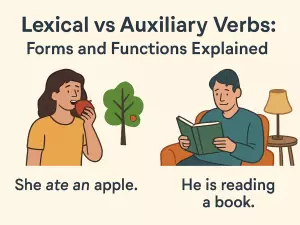
Lexical vs Auxiliary Verbs: Forms and Functions Explained
Learn what lexical verbs do in a sentence and how auxiliary verbs support them to form tense, aspect, and voice. It also explains do-support for questions, negatives, and emphasis, plus verbs that can be both types.
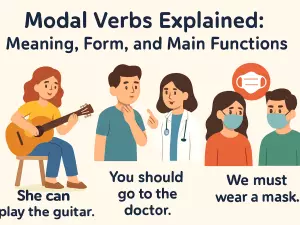
Modal Verbs Explained: Meaning, Form, and Main Functions
This article explains what modal verbs are, the core modals and their meanings, and the form rules: no -s, infinitive, or -ing. It shows how to make questions and negatives, express ability, permission, and obligation, and use modals in polite requests and offers.
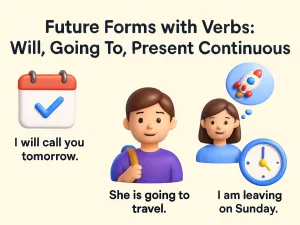
Future Forms with Verbs: Will, Going To, Present Continuous
This article explains when to use will, be going to, and the present continuous for future situations. It covers future time markers, forming questions and negatives, common mistakes, and includes practice on choosing the right future form.
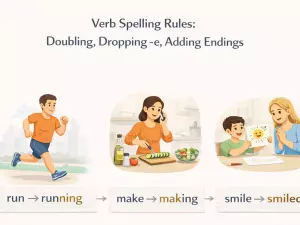
Verb Spelling Rules: Doubling, Dropping -e, Adding Endings
The article explains why English verbs change spelling with different endings. It covers key rules for doubling consonants, dropping final -e, handling y and ie endings, common learner mistakes, and includes quick tips and practice tasks.
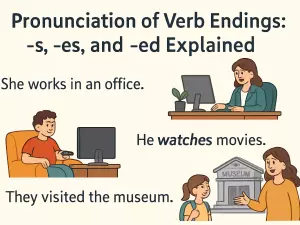
Pronunciation of Verb Endings: -s, -es, and -ed Explained
This article explains why verb endings change pronunciation, including the three sounds of -s/-es and -ed and how final sounds affect them. It also gives listening tips, flags common learner errors, and includes drills, patterns, and homework practice.
Irregular Verb Patterns and Groups in Modern English
The article explains what makes a verb irregular, covers main patterns such as unchanged forms, vowel changes, and specific endings, addresses common mistakes, and provides practical learning strategies and homework for mastering irregular verbs.
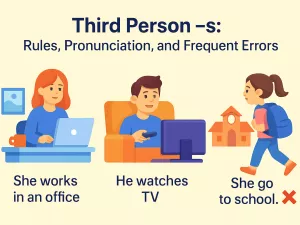
Third Person -s: Rules, Pronunciation, and Frequent Errors
Here we when to use the third person -s, spelling and pronunciation rules for -s, -es, and -ies, using does in negatives and questions, common learner mistakes, time expressions for habits, quick checks, and practice tasks.
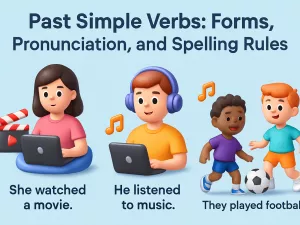
Past Simple Verbs: Forms, Pronunciation, and Spelling Rules
The article explains how to use the past simple tense, focusing on regular and irregular verbs, -ed spelling and pronunciation, negatives and questions with did, and common time expressions. It also includes practice exercises for mastering these points.
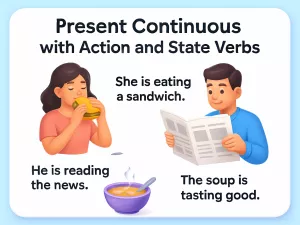
Present Continuous with Action and State Verbs
Here we the uses of the present continuous tense, its formation with am, is, or are plus -ing, differences between action and state verbs, temporary situations versus routines, future plans, spelling rules, and typical mistakes, with practice exercises.
Present Simple with Verbs: Meaning, Form, and Real Usage
Here we the uses of the present simple tense, forming positive and negative sentences, making questions, using adverbs of frequency, stative verbs, common mistakes, and offers practice tasks for homework. It follows the topics in the TOC.
Previous
1
...
15
16
17
18
19
20
21
22
23
...
124
Next