Search the site
Search
Grammar ▾
▸ Articles
▸ Advanced Grammar
▸ Adjectives & Adverbs
▸ Conjunctions
▸ Conditionals
▸ Determiners
▸ Gerunds & Infinitives
▸ Grammar Practice
▸ Modal Verbs
▸ Nouns
▸ Parts of Speech
▸ Prepositions
▸ Pronouns
▸ Quantifiers
▸ Question Formation
▸ Reported Speech
▸ Verbs
Writing ▾
▸ Punctuation
▸ Sentence Structure
▸ Writing Mistakes
Vocabulary ▾
▸ Visual Vocabulary
▸ Food Vocabulary
▸ People Vocabulary
▸ Places Vocabulary
▸ Hobbies Vocabulary
▸ Home Vocabulary
▸ School Vocabulary
▸ Weather Vocabulary
▸ Basic Vocabulary
▸ General Vocabulary
Speaking ▾
▸ Conversational English
Calculators
Contacts
Home
»
English
»
Grammar
Grammar
This section focuses on English grammar explained in a simple and practical way. You will find clear rules, step-by-step examples, and common mistakes to avoid, helping you build a strong foundation for speaking and writing confidently.
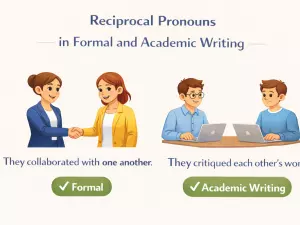
Reciprocal Pronouns in Formal and Academic Writing
Here we how reciprocal pronouns like each other and one another function in academic writing, clarifies their modern usage, formality, and ambiguity, highlights common learner mistakes, and provides examples and revision practice for formal style.
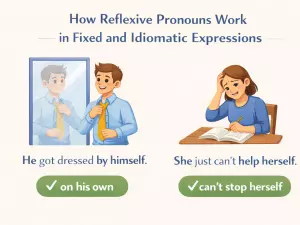
How Reflexive Pronouns Work in Fixed and Idiomatic Expressions
Here we why reflexive pronouns are used in fixed English expressions, lists common phrases, explains meaning changes if reflexives are omitted, contrasts reflexives for emphasis versus idioms, discusses register and learner errors, and offers learning tips.
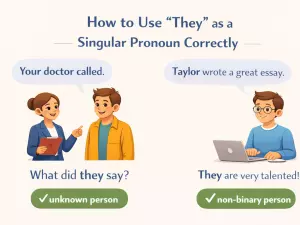
How to Use “They” as a Singular Pronoun Correctly
Here we the meaning and history of singular they, its use with indefinite pronouns and verbs, guidance from style guides, avoiding confusion with plural they, common mistakes, and practice tips for using singular they correctly.
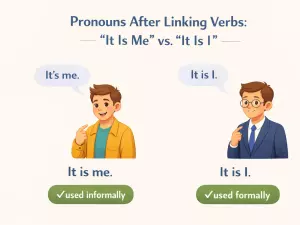
Pronouns After Linking Verbs: It Is Me vs It Is I
Here we the role of linking verbs, differences between traditional rules and modern usage, pronoun case in subject complements, formal versus informal preferences, common learner confusion, and how to choose natural forms like it is me or who/whom in…
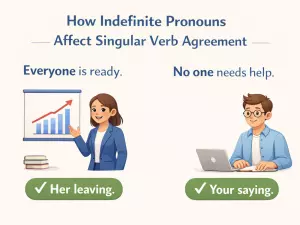
How Indefinite Pronouns Affect Singular Verb Agreement
Here we why indefinite pronouns such as everyone and nobody generally take singular verbs, when plural agreement is possible, how meaning influences verb choice, British and American differences, common learner errors, and includes practice exercises.
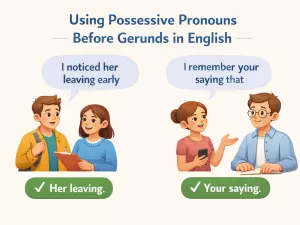
Using Possessive Pronouns Before Gerunds in English
This article explains gerunds, the use of possessive pronouns before -ing forms, and the difference between my doing and me doing. It covers formal rules, modern style, common mistakes, context differences, and includes practice exercises.
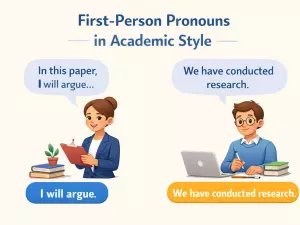
First-Person Pronouns in Academic Style
The article reviews traditional and modern perspectives on using I and we in academic writing, outlines style guide recommendations, discusses disciplinary differences, and explains how to balance author presence and objectivity, with examples and practice revising…
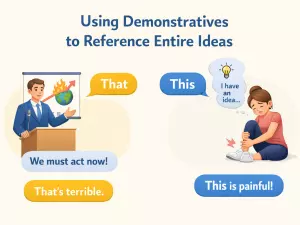
Using Demonstratives to Reference Entire Ideas
Here we how demonstratives like this and that refer to clauses or ideas, when to use each for previous statements, avoiding vague references, differences in spoken and written English, common ambiguities, editing for clarity, and includes revision practice.
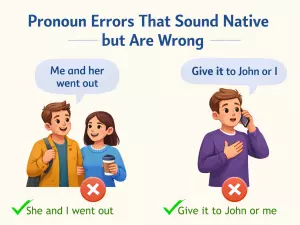
Pronoun Errors That Sound Native but Are Wrong
Some pronoun errors seem fine in speech but are wrong in formal writing. This article explains why, shows common near-native mistakes, contrasts correct and incorrect uses, and offers editing strategies and practice to catch subtle errors.
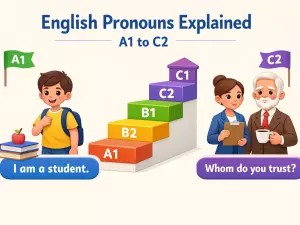
English Pronouns Explained by CEFR Level from A1 to C2
The article outlines how English pronoun learning evolves across CEFR levels, details typical mistakes and main learning goals at each stage, and explains how to use CEFR for targeted grammar study, including a summary table of pronoun progression.
Previous
1
...
31
32
33
34
35
36
37
38
39
...
124
Next