Search the site
Search
Grammar ▾
▸ Articles
▸ Advanced Grammar
▸ Adjectives & Adverbs
▸ Conjunctions
▸ Conditionals
▸ Determiners
▸ Gerunds & Infinitives
▸ Grammar Practice
▸ Modal Verbs
▸ Nouns
▸ Parts of Speech
▸ Prepositions
▸ Pronouns
▸ Quantifiers
▸ Question Formation
▸ Reported Speech
▸ Verbs
Writing ▾
▸ Punctuation
▸ Sentence Structure
▸ Writing Mistakes
Vocabulary ▾
▸ Visual Vocabulary
▸ Food Vocabulary
▸ People Vocabulary
▸ Places Vocabulary
▸ Hobbies Vocabulary
▸ Home Vocabulary
▸ School Vocabulary
▸ Weather Vocabulary
▸ Basic Vocabulary
▸ General Vocabulary
Speaking ▾
▸ Conversational English
Calculators
Contacts
Home
»
English
»
Grammar
Grammar
This section focuses on English grammar explained in a simple and practical way. You will find clear rules, step-by-step examples, and common mistakes to avoid, helping you build a strong foundation for speaking and writing confidently.
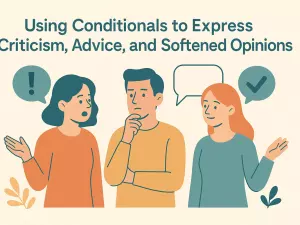
Using Conditionals to Express Criticism, Advice, and Softened Opinions
This article explains how to use conditionals like would, could, and might to soften criticism, give polite advice, and make strategic suggestions. It includes workplace and academic examples, common mistakes, and practice exercises.
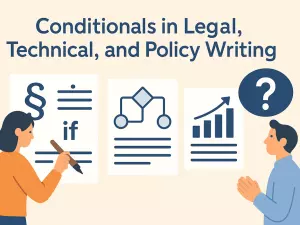
Conditionals in Legal, Technical, and Policy Writing
Here we the importance of conditional structures in legal and technical texts, compares strict and flexible conditions, highlights ambiguity risks, reviews common formatting patterns, and gives practical examples and tips for clear drafting.
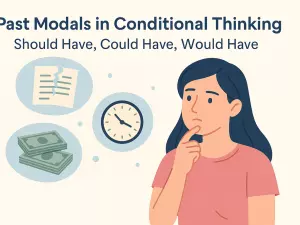
Past Modals in Conditional Thinking: Should Have, Could Have, Would Have
Here we the meanings of past modals in hypothetical or evaluative contexts, including should have for criticism or expectation, could have for missed opportunities, and would have for imagined results.
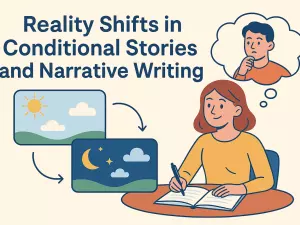
Reality Shifts in Conditional Stories and Narrative Writing
Here we how authors use conditionals to shift timelines and perspectives, differentiate imagined from real events, and create parallel realities. It includes examples from fiction and nonfiction, plus practice writing narrative reality shifts.
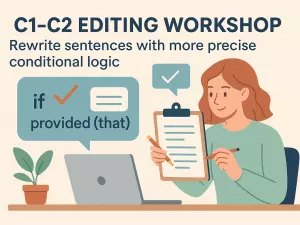
C1–C2 Editing Workshop: Rewrite Sentences with More Precise Conditional Logic
Here we advanced sentence rewriting, including how to identify and correct vague conditionals, improve logic with proper modals and tenses, clarify complex sentences, and practice transforming weak sentences using detailed examples.
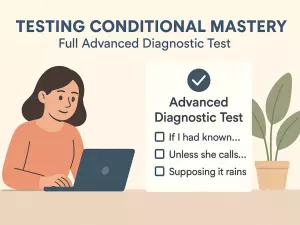
Testing Conditional Mastery: Full Advanced Diagnostic Test
This article reviews advanced English conditional structures, including mixed conditionals, past modals, inversion, and elliptical forms. It details task types, multi-step logic, scoring methods, and provides a full answer key for self-evaluation.
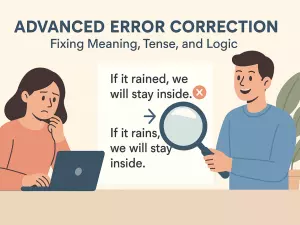
Advanced Error Correction: Fixing Meaning, Tense, and Logic in Conditionals
The article explains frequent C1–C2 conditional errors, including tense, modality, and meaning misalignment, mistakes in mixed and inverted conditionals, and strategies for spotting flawed logic. It also provides corrected examples and editing practice.
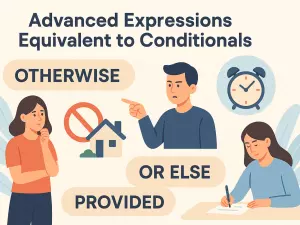
Advanced Expressions Equivalent to Conditionals: Otherwise, Or Else, Provided
Here we how expressions such as otherwise, or else, and provided that function as conditionals, compares their tone and usage in different contexts, and gives examples and practice for replacing if-clauses with these alternatives.
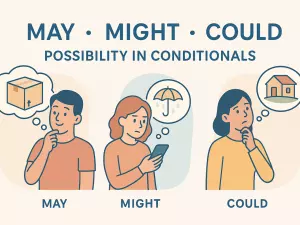
Using May, Might, and Could for Degrees of Possibility in Conditionals
Here we how may, might, and could indicate different levels of possibility, compares their probability and tone, explains their use in second, third, and mixed conditionals with examples, highlights common errors, and offers practice in choosing the right…
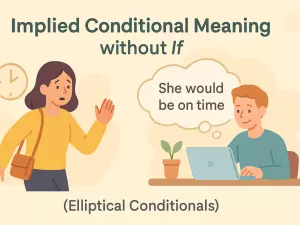
Implied Conditional Meaning Without If (Elliptical Conditionals)
The article defines elliptical conditionals, explores how dropping if alters style and emphasis in speech, distinguishes them from reduced clauses, and provides examples from journalism, fiction, and academic writing, along with practice exercises for creating them.
Previous
1
...
65
66
67
68
69
70
71
72
73
...
124
Next