Search the site
Search
Grammar ▾
▸ Articles
▸ Advanced Grammar
▸ Adjectives & Adverbs
▸ Conjunctions
▸ Conditionals
▸ Determiners
▸ Gerunds & Infinitives
▸ Grammar Practice
▸ Modal Verbs
▸ Nouns
▸ Parts of Speech
▸ Prepositions
▸ Pronouns
▸ Quantifiers
▸ Question Formation
▸ Reported Speech
▸ Verbs
Writing ▾
▸ Punctuation
▸ Sentence Structure
▸ Writing Mistakes
Vocabulary ▾
▸ Visual Vocabulary
▸ Food Vocabulary
▸ People Vocabulary
▸ Places Vocabulary
▸ Hobbies Vocabulary
▸ Home Vocabulary
▸ School Vocabulary
▸ Weather Vocabulary
▸ Basic Vocabulary
▸ General Vocabulary
Speaking ▾
▸ Conversational English
Calculators
Contacts
Home
»
English
»
Grammar
Grammar
This section focuses on English grammar explained in a simple and practical way. You will find clear rules, step-by-step examples, and common mistakes to avoid, helping you build a strong foundation for speaking and writing confidently.
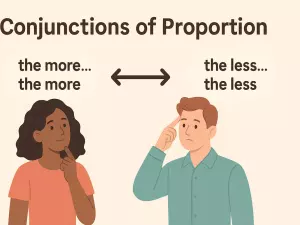
Conjunctions of Proportion: the more…the more / the less…the less
This article explains proportional relationships in English sentences, covers the structure of the more…the more and the less…the less, explores emphasis, common uses, typical errors, real examples, and offers sentence-building practice.
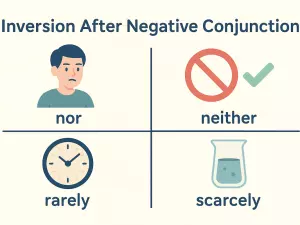
Inversion After Negative Conjunctions: nor, neither, rarely, scarcely
The article explains what inversion is and why it appears in English, highlights the conjunctions and adverbs that trigger it, covers patterns with nor, neither, rarely, and scarcely, and gives rules, examples, and practice for using negative inversion correctly.
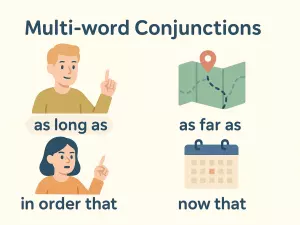
Multi-word Conjunctions: as long as, as far as, in order that, now that
This article explains what multi-word conjunctions are and why they matter, covering how to use as long as, as far as, in order that, and now that. It includes register notes, common mistakes, and practice exercises.
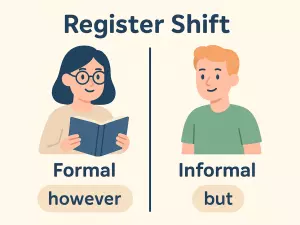
Register Shift: formal vs informal conjunction use
This article explains register in English, focusing on how conjunctions and transitions vary between formal and informal contexts. It provides examples from emails, essays, and speech, and guides you in rewriting informal text in a formal style.
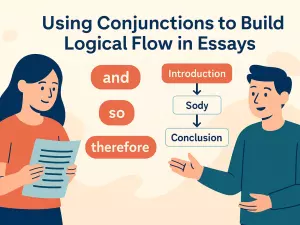
Using Conjunctions to Build Logical Flow in Essays
Here we the importance of logical flow in academic writing, discusses using various conjunctions for clarity, explains how to structure paragraphs with clear progression, and offers examples and exercises to improve paragraph cohesion.
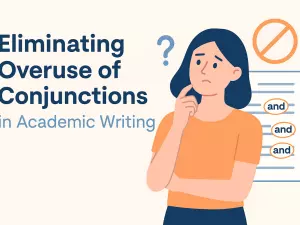
Eliminating Overuse of Conjunctions in Academic Writing
Here we common issues from overusing conjunctions, how to identify and reduce unnecessary linkers, and ways to use punctuation or structure instead. It also gives improved sentence examples and offers a practice exercise to minimize conjunctions.
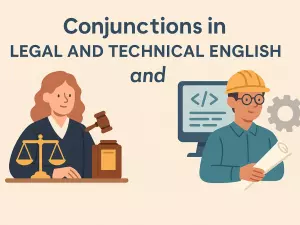
Conjunctions in Legal and Technical English
Here we the importance of precise conjunctions in legal and technical writing, reviews commonly used conjunctions, and explains how word choice can change interpretations. It includes real examples and practice choosing the clearest conjunctions.
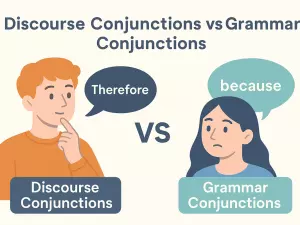
Discourse Conjunctions vs Grammar Conjunctions
This article explains how discourse conjunctions link ideas across sentences, while grammar conjunctions connect parts within one sentence. It gives examples of each, discusses their role in cohesion, and includes a practice to categorize them.
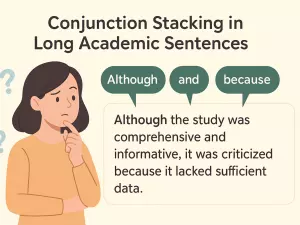
Conjunction Stacking in Long Academic Sentences (C1–C2)
Here we conjunction stacking in complex writing, including how to connect multiple clauses with layered conjunctions, common academic patterns, typical mistakes, and practical steps for reorganizing confusing sentences to improve clarity.
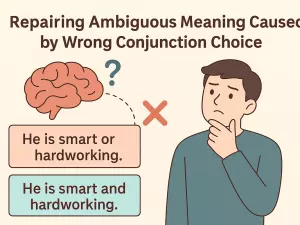
Repairing Ambiguous Meaning Caused by Wrong Conjunction Choice
Here we how incorrect conjunctions cause unclear meaning, how to identify hidden relationships between ideas, and ways to choose accurate conjunctions. It includes examples, guidelines, and practice for correcting ambiguous sentences.
Previous
1
...
69
70
71
72
73
74
75
76
77
...
124
Next