Search the site
Search
Grammar ▾
▸ Articles
▸ Advanced Grammar
▸ Adjectives & Adverbs
▸ Conjunctions
▸ Conditionals
▸ Determiners
▸ Gerunds & Infinitives
▸ Grammar Practice
▸ Modal Verbs
▸ Nouns
▸ Parts of Speech
▸ Prepositions
▸ Pronouns
▸ Quantifiers
▸ Question Formation
▸ Reported Speech
▸ Verbs
Writing ▾
▸ Punctuation
▸ Sentence Structure
▸ Writing Mistakes
Vocabulary ▾
▸ Visual Vocabulary
▸ Food Vocabulary
▸ People Vocabulary
▸ Places Vocabulary
▸ Hobbies Vocabulary
▸ Home Vocabulary
▸ School Vocabulary
▸ Weather Vocabulary
▸ Basic Vocabulary
▸ General Vocabulary
Speaking ▾
▸ Conversational English
Calculators
Contacts
Home
»
English
»
Grammar
Grammar
This section focuses on English grammar explained in a simple and practical way. You will find clear rules, step-by-step examples, and common mistakes to avoid, helping you build a strong foundation for speaking and writing confidently.
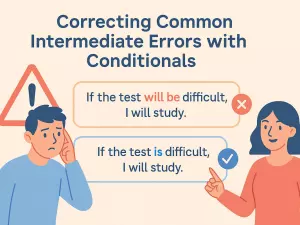
Correcting Common Intermediate Errors with Conditionals
Here we frequent B1–B2 mistakes with conditionals, such as tense errors, wrong modal verbs, and confusion with inversion or mixed forms. It offers clear guidelines and practice for editing and rewriting incorrect conditional sentences.
Real vs Unreal Conditions: Meaning and Structure
This article explains how English uses tense patterns to distinguish real from unreal situations in present, future, and past conditions. It covers meaning shifts, gives examples of tone and probability, and offers practice changing sentence types.
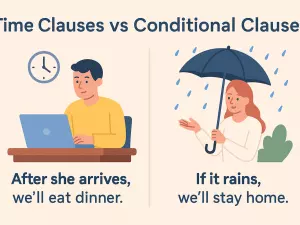
Time Clauses vs Conditional Clauses: Avoiding Confusion
The article explains how time and conditional clauses differ, lists key conjunctions for both, and clarifies why will is not used in future time clauses. It also gives examples and exercises for classifying sentences as time or conditional clauses.
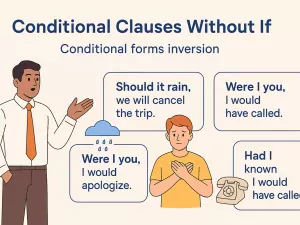
Conditional Clauses Without If: Should, Were, Had Inversion
Here we what inversion is and why it appears in formal English, details patterns like should, were, and had plus subject, and explains how these differ from standard if-clauses.
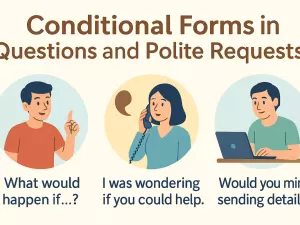
Conditional Forms in Questions and Polite Requests
Here we how to use conditionals in indirect or polite questions, including patterns with would, could, and might.
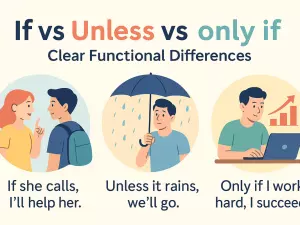
If vs Unless vs Only If: Clear Functional Differences
This article explains the differences between if, unless, and only if, their logical roles, and how each affects sentence meaning. It covers clause placement, tone, and formality, and includes examples and practice choosing the right conjunction.
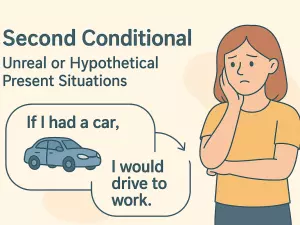
Second Conditional: Unreal or Hypothetical Present Situations
Here we how the second conditional describes unreal or hypothetical present situations, its structure with if and past simple plus would, differences from real future meaning, use of could and might, typical contexts, common tense mistakes, and practice…
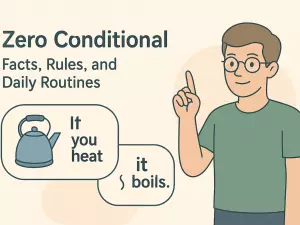
Zero Conditional: Facts, Rules, and Daily Routines
This article explains the zero conditional’s meaning, its present simple form, and how it’s used for general truths, facts, instructions, and routines. It also covers common mistakes and provides practice with zero conditional sentences.
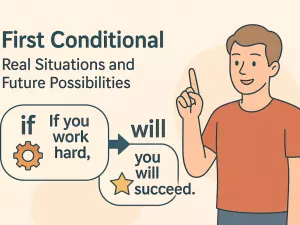
First Conditional: Real Situations and Future Possibilities
Here we the first conditional for real future situations, explaining its meaning, form, and use for plans, predictions, and warnings. It also discusses variations with will, won’t, may, might, can, word order, and includes practice exercises.
How to Use If for Real Conditions (Beginner Guide)
Here we how real conditional sentences work, when to use if in real-life situations, patterns for advice and predictions, sentence placement, common mistakes with will, and includes practice rewriting sentences to show correct real conditions.
Previous
1
...
67
68
69
70
71
72
73
74
75
...
124
Next