Search the site
Search
Grammar ▾
▸ Articles
▸ Advanced Grammar
▸ Adjectives & Adverbs
▸ Conjunctions
▸ Conditionals
▸ Determiners
▸ Gerunds & Infinitives
▸ Grammar Practice
▸ Modal Verbs
▸ Nouns
▸ Parts of Speech
▸ Prepositions
▸ Pronouns
▸ Quantifiers
▸ Question Formation
▸ Reported Speech
▸ Verbs
Writing ▾
▸ Punctuation
▸ Sentence Structure
▸ Writing Mistakes
Vocabulary ▾
▸ Visual Vocabulary
▸ Food Vocabulary
▸ People Vocabulary
▸ Places Vocabulary
▸ Hobbies Vocabulary
▸ Home Vocabulary
▸ School Vocabulary
▸ Weather Vocabulary
▸ Basic Vocabulary
▸ General Vocabulary
Speaking ▾
▸ Conversational English
Calculators
Contacts
Home
»
English
»
Grammar
Grammar
This section focuses on English grammar explained in a simple and practical way. You will find clear rules, step-by-step examples, and common mistakes to avoid, helping you build a strong foundation for speaking and writing confidently.
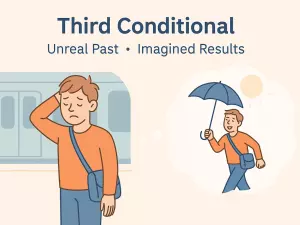
Third Conditional: Unreal Past and Imagined Results
Here we unreal past conditions and regrets, how to form the third conditional with if plus past perfect and would have plus past participle, using could have and might have, expressing blame or missed chances, common mistakes, and practice exercises.
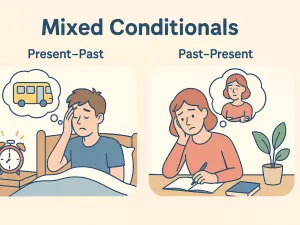
Mixed Conditionals: Present–Past and Past–Present Combinations
This article explains what mixed conditionals are and why they’re used in English. It covers the two main patterns, their forms and meanings, how they express timelines, real-life examples, and practice transforming conditionals.
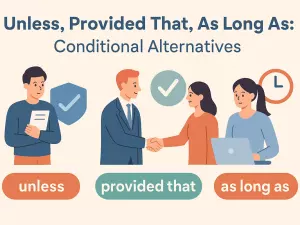
Unless, Provided That, As Long As: Conditional Alternatives
Here we how to use unless, provided that, and as long as for different types of conditions, highlights formal and informal usage, explains correct word order and punctuation, and offers practice in selecting the right conditional phrase for sentences.
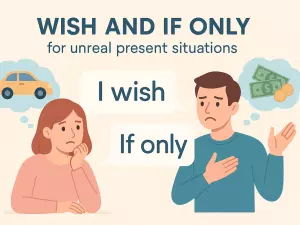
Wish and If Only for Unreal Present Situations
Here we the unreal present meaning in English, showing how wish and if only with past simple express dissatisfaction or a desire for change. It compares their emotional strength, gives real examples, and includes sentence rewriting practice.
Wish + Past Perfect: Regrets About the Past
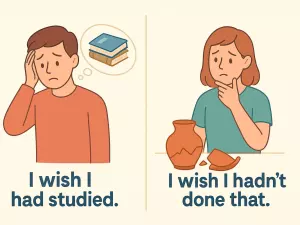
Here we how wish plus past perfect is used for past regrets, contrasts wishes about the present and past, lists typical regret phrases, provides real and fictional examples, points out common errors, and includes practice rewriting regrets.
How to Use In Case and In the Event That Correctly
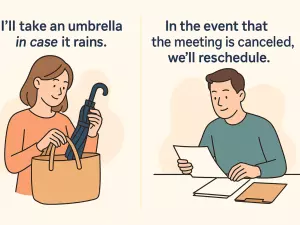
The article explains how precaution works in English conditionals, when to use in case for daily situations and in the event that for formal or rare ones, differences in tone and likelihood, common mistakes, and gives practice with both phrases.
Using Modal Verbs in Conditional Sentences: Can, Could, Might, Would
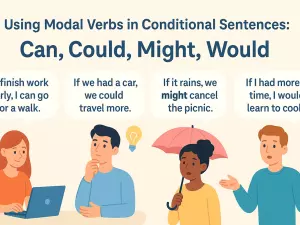
This article explains modal verbs in conditional sentences, highlighting the differences between ability, possibility, permission, and likelihood. It covers how would, might, and could work and provides B1–B2 level structures with practice exercises.
Be Careful With Will in If-Clauses: When It Is Correct
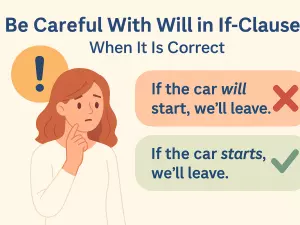
The article explains the rule against using will in if-clauses for real conditionals, highlights exceptions for willingness and repeated actions, compares correct and incorrect examples, offers decision guidelines, and provides practice questions.
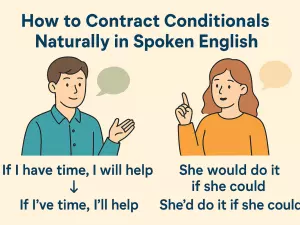
How to Contract Conditionals Naturally in Spoken English
The article lists the most common contractions in conditional speech like it’ll, I’d, and wouldn’t, explains why they make conversation sound natural, points out common mistakes, shows real dialogue examples, and gives practice rewriting sentences with contractions.
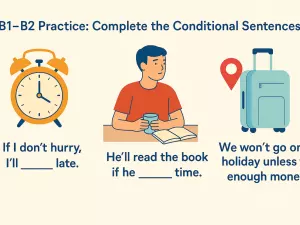
B1–B2 Practice: Complete the Conditional Sentences
The article provides structured B1–B2 English practice with fill-in-the-blank tasks for all conditional types, exercises on real versus unreal meanings, modal verbs in results, and sentence transformations. An answer key with explanations is included.
Previous
1
...
66
67
68
69
70
71
72
73
74
...
124
Next