Search the site
Search
Grammar ▾
▸ Articles
▸ Advanced Grammar
▸ Adjectives & Adverbs
▸ Conjunctions
▸ Conditionals
▸ Determiners
▸ Gerunds & Infinitives
▸ Grammar Practice
▸ Modal Verbs
▸ Nouns
▸ Parts of Speech
▸ Passive Voice
▸ Prepositions
▸ Pronouns
▸ Quantifiers
▸ Question Formation
▸ Reported Speech
▸ Verbs
Writing ▾
▸ Punctuation
▸ Sentence Structure
▸ Writing Mistakes
Vocabulary ▾
▸ Visual Vocabulary
▸ Food Vocabulary
▸ People Vocabulary
▸ Places Vocabulary
▸ Hobbies Vocabulary
▸ Home Vocabulary
▸ School Vocabulary
▸ Weather Vocabulary
▸ Basic Vocabulary
▸ General Vocabulary
Speaking ▾
▸ Conversational English
Calculators
Contacts
Home
» B1–B2 Intermediate
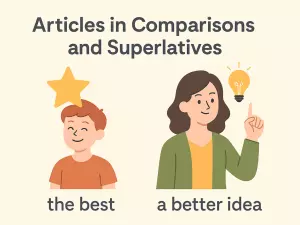
Articles in Comparisons and Superlatives: the best, a better idea
This article explains how to use the and a with superlatives and comparatives, highlights fixed expressions without articles, covers patterns like the sooner the better, and helps you avoid mistakes with missing or extra the in comparison sentences.
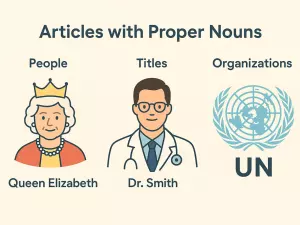
Articles with Proper Nouns: People, Titles, Organizations
This article explains when to use or omit 'the' with names, titles like the Queen or President Smith, family groups like the Smiths, organizations, companies, and country names. It ends with practice exercises on proper article use.
Articles with Musical Instruments: play the piano, play guitar
Here we when to use the with musical instruments, such as play the piano, and notes exceptions like play guitar in some dialects. It also discusses owning instruments, countable forms, style differences, and offers practice sentences.
Article Choice in Short Texts: Narratives and Emails
This article explains how using articles improves clarity in short texts like stories and emails. It covers article patterns, first and later mentions, formal and informal usage, editing tips, and offers practice with sample texts.
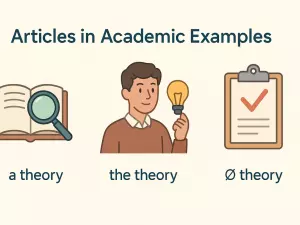
Articles in Academic Examples: a theory, the theory, or No Article Ø
Here we how to use a, the, or no article in academic writing. It explains introducing concepts, general references, shifts from a to the, discipline-specific patterns, and provides examples plus editing practice.
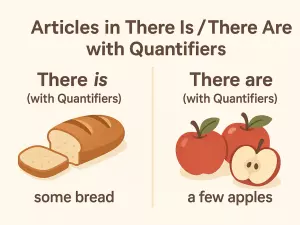
Articles in There Is / There Are with Quantifiers (some, many, a few)
Here we how to use there is and there are with nouns, when to use quantifiers like some, any, many, and a few instead of articles, how to combine them, and highlights typical mistakes. It also offers practice with sentence completion.
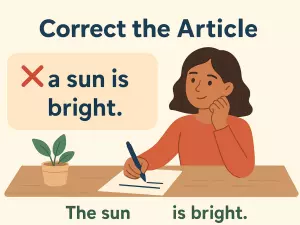
Practice: Correct the Article in Each Sentence (B1–B2)
Here we key rules for writing articles, common B1–B2 errors with examples, and error-spotting practice. It also gives step-by-step correction strategies, model answers with explanations, and extra exercises for self-study.
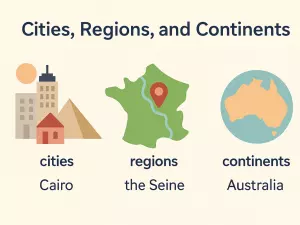
Articles with Cities, Regions, and Continents
This article explains when to use or skip 'the' with place names, including cities, continents, regions, and exceptions like 'the Middle East' or 'the city center.' It also offers practice exercises to reinforce the rules.
The Definite Article “the”: Reference and Shared Knowledge
Here we how to use "the" with first, second, and shared references, when to use it for known or obvious things, and its use after first mention. It also discusses common mistakes and includes practice choosing "the" or zero article.
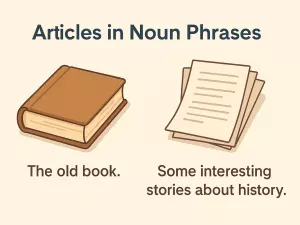
Articles in Noun Phrases with Adjectives and Modifiers
The article reviews noun phrase structure, explains article placement in complex noun phrases, covers articles with multiple adjectives, and discusses noun of noun patterns. It also addresses avoiding double articles and provides practice with complex noun phrases.
Previous
1
...
34
35
36
37
38
39
40
41
42
43
Next