Search the site
Search
Grammar ▾
▸ Articles
▸ Advanced Grammar
▸ Adjectives & Adverbs
▸ Conjunctions
▸ Conditionals
▸ Determiners
▸ Gerunds & Infinitives
▸ Grammar Practice
▸ Modal Verbs
▸ Nouns
▸ Parts of Speech
▸ Passive Voice
▸ Prepositions
▸ Pronouns
▸ Quantifiers
▸ Question Formation
▸ Reported Speech
▸ Verbs
Writing ▾
▸ Punctuation
▸ Sentence Structure
▸ Writing Mistakes
Vocabulary ▾
▸ Visual Vocabulary
▸ Food Vocabulary
▸ People Vocabulary
▸ Places Vocabulary
▸ Hobbies Vocabulary
▸ Home Vocabulary
▸ School Vocabulary
▸ Weather Vocabulary
▸ Basic Vocabulary
▸ General Vocabulary
Speaking ▾
▸ Conversational English
Calculators
Contacts
Home
» B1–B2 Intermediate
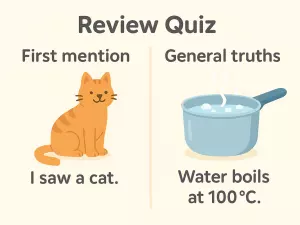
Review Quiz: Mixed Article Practice for Intermediate Learners
The article summarizes essential concepts about English articles, features mixed multiple-choice and gap-fill questions using realistic examples, provides a self-check answer key with brief notes, guides on analyzing mistakes, and suggests next steps for improvement.
Articles with the World, the Internet, the Police and Similar Nouns
Here we when to use 'the' with nouns like world, environment, police, media, internet, and web. It discusses cases without an article, highlights frequent learner mistakes, and offers practice to correct article usage in context.
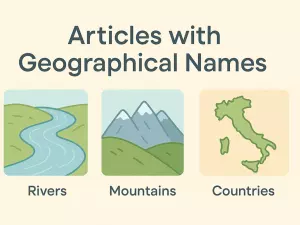
Articles with Geographical Names: Rivers, Mountains, Countries
The article details when to use articles such as "the" with geographical names, including rivers, seas, oceans, mountain ranges, countries, regions, cities, lakes, islands, and traditional names. It also provides practice with example sentences.
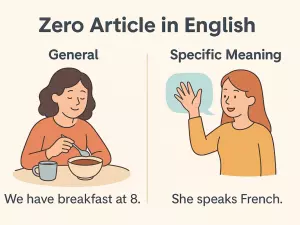
Zero Article in English: General vs Specific Meaning
This article explains what the zero article means in English, how it shows general ideas, and how a or the signal something specific. It covers usage with plural and uncountable nouns, contrasts examples, and includes practice exercises.
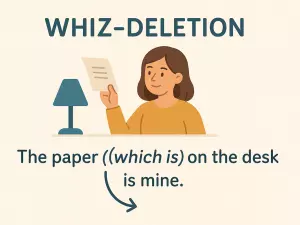
Whiz-Deletion in Relative Clauses (B1-B2 intro)
This article explains whiz-deletion, which is when a relative pronoun and be verb are omitted in English. It covers when deletion is possible, example sentences for B1–B2 learners, common mistakes, and provides practice exercises.
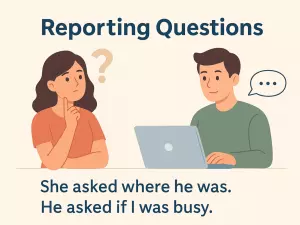
Reporting Questions: ask where / ask if
This article explains how to change direct questions into reported questions. It covers word order rules, using ask where for wh-questions, ask if or whether for yes–no questions, removing do/does/did, and common reporting verbs.
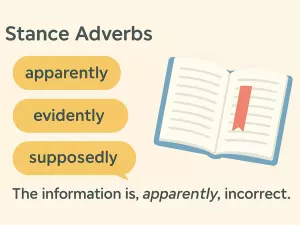
Stance Adverbs (apparently, evidently, supposedly)
Here we what stance adverbs express, common examples with their nuances, and where to place them in sentences. It also contrasts them with opinion and certainty adverbs, gives everyday examples, and offers advice and exercises for correct use.
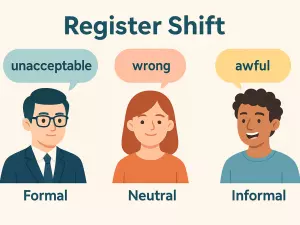
Register Shift: formal / neutral / informal adjective replacements
The article defines register in English, compares formal, neutral, and informal tones, explains how adjective choices change message strength, and gives guidance on choosing the right tone for academic, workplace, and casual contexts, with practice included.
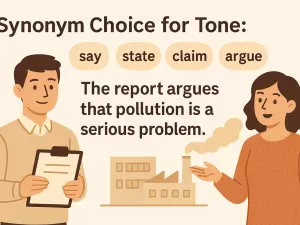
Synonym Choice for Tone: say vs state vs claim vs argue
This article explains why choosing the right reporting verb matters, highlights subtle tone differences, and shows how to use say, state, claim, and argue accurately. It covers examples, avoiding bias, and includes practice picking the best synonym.
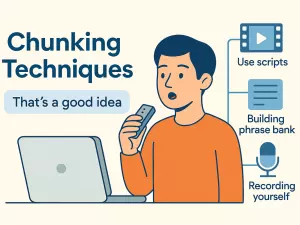
Chunking Techniques for Fluency at B2
Here we what chunking in speaking is, why it boosts fluency and confidence, the main types of chunks, and practical ways to spot, practice, and use them—like using scripts, recording yourself, and building a personal phrase bank.
Previous
1
...
34
35
36
37
38
39
40
41
42
43
Next