Search the site
Search
Grammar ▾
▸ Articles
▸ Advanced Grammar
▸ Adjectives & Adverbs
▸ Conjunctions
▸ Conditionals
▸ Determiners
▸ Gerunds & Infinitives
▸ Grammar Practice
▸ Modal Verbs
▸ Nouns
▸ Parts of Speech
▸ Passive Voice
▸ Prepositions
▸ Pronouns
▸ Quantifiers
▸ Question Formation
▸ Reported Speech
▸ Verbs
Writing ▾
▸ Punctuation
▸ Sentence Structure
▸ Writing Mistakes
Vocabulary ▾
▸ Visual Vocabulary
▸ Food Vocabulary
▸ People Vocabulary
▸ Places Vocabulary
▸ Hobbies Vocabulary
▸ Home Vocabulary
▸ School Vocabulary
▸ Weather Vocabulary
▸ Basic Vocabulary
▸ General Vocabulary
Speaking ▾
▸ Conversational English
Calculators
Contacts
Home
» C1 Advanced
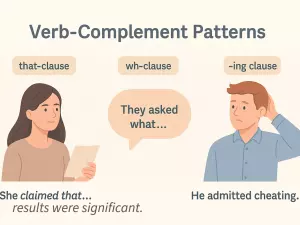
Verb–Complement Patterns in Academic English: That-, Wh-, and -ing Clauses
This article explains how academic verbs pair with that-clauses, wh-clauses, and -ing clauses. It highlights subtle meaning changes, offers advice for handling multiple complements, and provides practice matching verbs with their correct clauses.
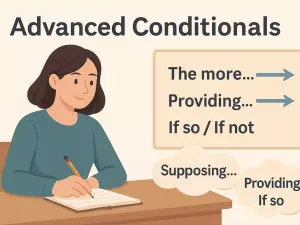
Advanced Conditional Alternatives: Supposing, Providing, If So / If Not
Here we advanced ways to express conditions in English, such as using supposing, provided, and providing. It also covers if so and if not, differences in formality, and how to rewrite basic conditionals using these alternatives.
Advanced Cohesion Techniques: Pronoun Chains, Reference, and Clarity
This article explains how to use reference for cohesion, create clear pronoun chains, and avoid vague references. It also covers using repetition and substitution, maintaining cohesion across sentences and paragraphs, and practicing cohesion repair.
Theme–Rheme Organization: Controlling Information Flow in Paragraphs
Here we the concepts of theme and rheme in discourse, strategies for choosing effective sentence themes, linking themes within a paragraph, placing new information in the rheme, and improving coherence through theme–rheme control and practice.
Rephrasing for Academic Strength: Reduce Filler, Tighten Structure
Here we how to spot and revise weak or wordy sentences, replace vague verbs and nouns with stronger alternatives, and rephrase for better cohesion and logic. It also addresses balancing complexity with readability and includes practice exercises.
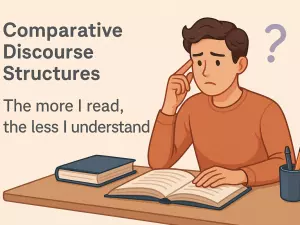
Comparative Discourse Structures: The More…, The Less… Patterns
This article explains the form and meaning of the more…, the less… patterns, how they express proportional relationships, their stylistic effects in argument and narrative, common tense and parallelism errors, and variations with longer clauses.
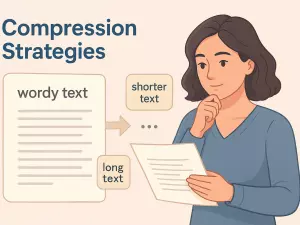
Compression Strategies: Cutting Word Count Without Losing Meaning
Here we why compression is important in advanced writing, how to replace clauses with shorter forms, use non-finite verbs and nominalizations, remove redundancy, and maintain clarity. It also provides step-by-step practice on compressing paragraphs.
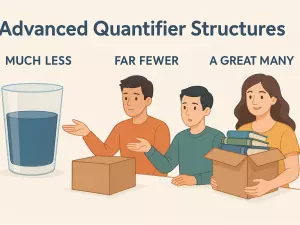
Advanced Quantifier Structures: Much Less, Far Fewer, A Great Many
The article reviews basic quantifiers, covers intensified forms such as far fewer and much more, and explains complex of-phrase patterns. It also discusses using quantifiers for emphasis or contrast, common countable vs uncountable mistakes, and includes practice tasks.
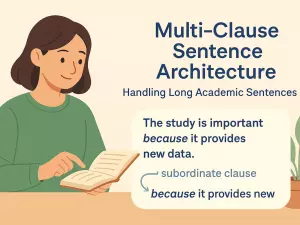
Multi-Clause Sentence Architecture: Handling Long Academic Sentences
Here we planning complex sentences with several clauses, balancing coordination and subordination, and managing various clause types. It also addresses avoiding run-ons and fragments, revising long sentences, and practicing sentence redesign.
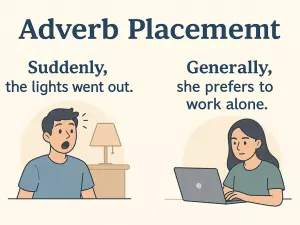
Adverb Placement for Tone and Precision in Advanced Writing
This article explains where to place adverbs—front, mid, or end of a sentence—and how their position affects tone and meaning. It covers mid-position rules, confusing pairs like only and just, common mistakes, and offers practice for clarity.
Previous
1
...
22
23
24
25
26
27
28
29
30
31
Next