Search the site
Search
Grammar ▾
▸ Articles
▸ Advanced Grammar
▸ Adjectives & Adverbs
▸ Conjunctions
▸ Conditionals
▸ Determiners
▸ Gerunds & Infinitives
▸ Grammar Practice
▸ Modal Verbs
▸ Nouns
▸ Parts of Speech
▸ Passive Voice
▸ Prepositions
▸ Pronouns
▸ Quantifiers
▸ Question Formation
▸ Reported Speech
▸ Verbs
Writing ▾
▸ Punctuation
▸ Sentence Structure
▸ Writing Mistakes
Vocabulary ▾
▸ Visual Vocabulary
▸ Food Vocabulary
▸ People Vocabulary
▸ Places Vocabulary
▸ Hobbies Vocabulary
▸ Home Vocabulary
▸ School Vocabulary
▸ Weather Vocabulary
▸ Basic Vocabulary
▸ General Vocabulary
Speaking ▾
▸ Conversational English
Calculators
Contacts
Home
» C1 Advanced
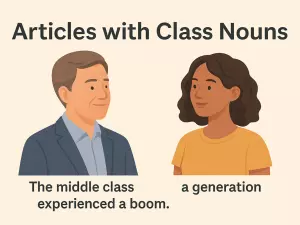
Articles with Class Nouns: the middle class, a generation
This article explains how to use articles with class nouns like the poor and a generation. It covers when to use the, a/an, or no article for social groups, discusses political and media usage, and offers practice sentences.
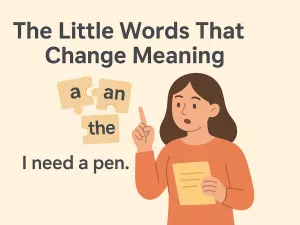
The Little Words That Change Meaning: Master a / an / the Fast
This article explains how using a, an, and the can change the meaning, tone, or focus of a sentence. It covers minimal pairs, shifts between general and specific reference, typical mistakes, and gives practice with real examples.
Reduced Relative Clauses: the man living next door
This article explains reduced relative clauses, contrasts them with full clauses, and shows when reduction is possible. It covers present and past participle reductions, avoiding ambiguity, formal usage, and includes practice exercises.
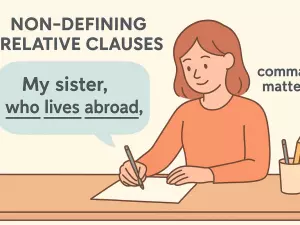
Non-defining Relative Clauses and Commas (polishing writing)
Here we the purpose of non-defining relative clauses, correct comma placement, and when to use who versus which. It also discusses essential versus non-essential information, common mistakes, overuse in academic writing, and offers comma practice.
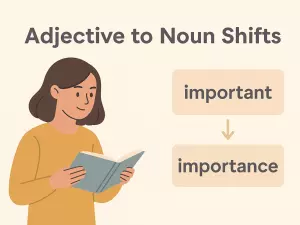
Adjective to Noun Shifts in Academic English
Here we why academic English uses nouns instead of adjectives, highlights common adjective-to-noun pairs and suffixes, explains meaning changes, points out when adjectives work better, warns against over-nominalization, and provides practice tasks.
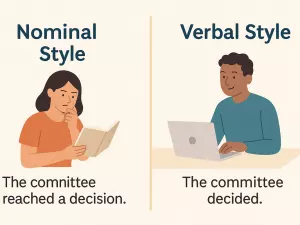
Nominal Style vs Verbal Style: When to Change for Clarity
This article explains nominal and verbal styles, how to identify heavy nominal constructions, and their uses in technical or legal writing. It also covers when to use verbal style, finding hidden verbs, rewriting tips, and provides hands-on practice.
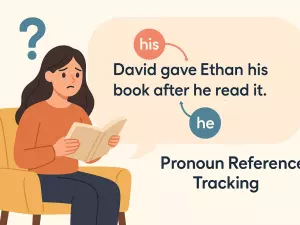
Pronoun Reference Tracking in Long Sentences
Here we what pronoun reference is, typical issues in lengthy sentences, and the difference between ambiguous and clear antecedents. It also suggests strategies for clarity, offers examples, and provides practice with fixing ambiguous pronouns.
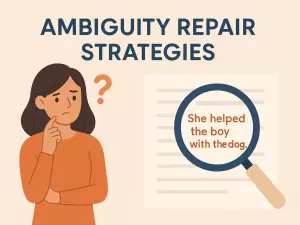
Ambiguity Repair Strategies in Writing
The article defines ambiguity in writing, describes structural and lexical ambiguity, and explains how it weakens clarity. It also offers techniques for removing ambiguity, tips for stronger wording, common traps, and practice with rewriting sentences.
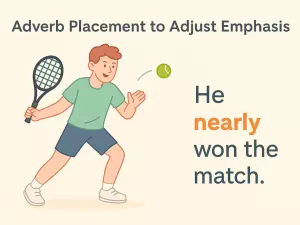
Adverb Placement to Adjust Emphasis (He nearly won…)
This article explains how emphasis adverbs like nearly and only affect sentence meaning depending on their position. It covers main adverb placements, how placement changes emphasis, common patterns, examples, and tips to avoid ambiguity.
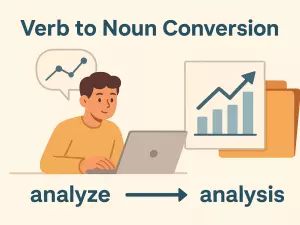
Verb to Noun Conversion for Formal Writing (analyze → analysis)
This article explains verb to noun conversion, key suffixes like -tion and -ment, how meanings shift, and when to use these nouns in reports and essays. It warns against overuse and offers practice for balancing verb and noun forms.
Previous
1
...
22
23
24
25
26
27
28
29
30
31
Next