Search the site
Search
Grammar ▾
▸ Articles
▸ Advanced Grammar
▸ Adjectives & Adverbs
▸ Conjunctions
▸ Conditionals
▸ Determiners
▸ Gerunds & Infinitives
▸ Grammar Practice
▸ Modal Verbs
▸ Nouns
▸ Parts of Speech
▸ Passive Voice
▸ Prepositions
▸ Pronouns
▸ Quantifiers
▸ Question Formation
▸ Reported Speech
▸ Verbs
Writing ▾
▸ Punctuation
▸ Sentence Structure
▸ Writing Mistakes
Vocabulary ▾
▸ Visual Vocabulary
▸ Food Vocabulary
▸ People Vocabulary
▸ Places Vocabulary
▸ Hobbies Vocabulary
▸ Home Vocabulary
▸ School Vocabulary
▸ Weather Vocabulary
▸ Basic Vocabulary
▸ General Vocabulary
Speaking ▾
▸ Conversational English
Calculators
Contacts
Home
» C1 Advanced
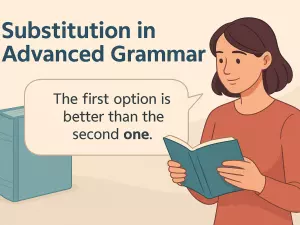
Substitution in Advanced Grammar: Using “One”, “Do”, “So”, and “Not”
Here we the difference between substitution and ellipsis, explains how to use words like one, ones, do, so, and not to avoid repetition, discusses their impact on politeness and economy, points out frequent mistakes, and provides practice exercises.
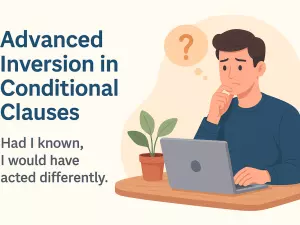
Advanced Inversion in Conditional Clauses for Formal Style
This article explains using inversion instead of if-clauses in English conditionals. It covers patterns with had, were, and should, formality and rhetorical effects, tense and subject restrictions, common errors, and practice exercises.
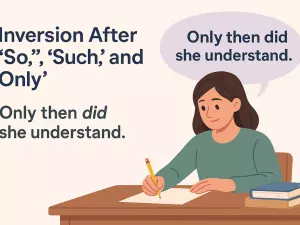
Inversion After “So”, “Such”, and “Only”: Formal Emphasis Techniques
This article reviews inversion in English, showing how it works with so, such, only, and rare adverbs. It explains when inversion is natural or formal, highlights common mistakes, and provides practice rewriting sentences.
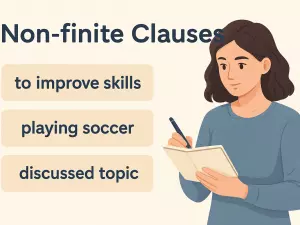
Non-finite Clauses for Academic Compression: To-, -ing, and -ed Forms
Here we types of non-finite clauses in English, their roles expressing reason, time, result, and condition, and how to use to-infinitives, -ing, and -ed forms. It also addresses avoiding ambiguity and using non-finite clauses in academic writing.
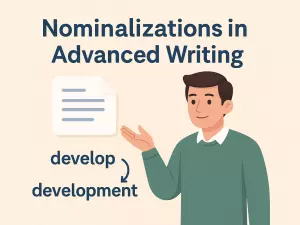
Nominalizations in Advanced Writing: Turning Verbs into Nouns
Here we what nominalization means in grammar, shows how verbs and adjectives become nouns, explains its benefits and drawbacks in academic writing, and provides practice in changing clauses to nominalized forms while maintaining clear style.
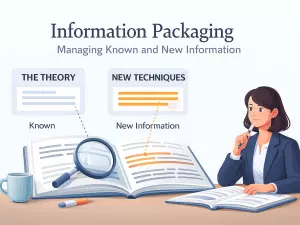
Information Packaging: Managing Known and New Information
Here we how to balance given and new information in writing by positioning known and new elements in clauses, using pronouns and definite noun phrases, introducing new ideas clearly, linking sentences smoothly, and practicing text reorganization.
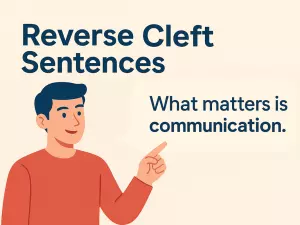
Reverse Cleft Sentences: What Matters Is… Structures Explained
Here we the structure of what-cleft and reverse cleft sentences, contrasts them with it-clefts, and explains how they highlight actions, reasons, and results.
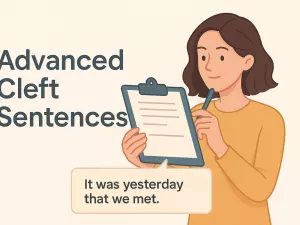
Advanced Cleft Sentences: More Ways to Emphasize Key Information
The article reviews basic it-cleft patterns, explores different cleft sentence types, and shows how to use clefts to emphasize time, place, and reason. It also covers contrast, correction, register concerns, and offers practice converting sentences.
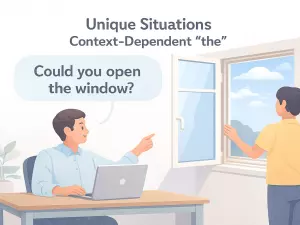
Articles with Unique Situations and Context-Dependent “the”
This article explains how the definite article the is used with unique contexts, local places, time expressions, and situations, plus when to omit it. Practice with context-based examples to improve your article usage in English.
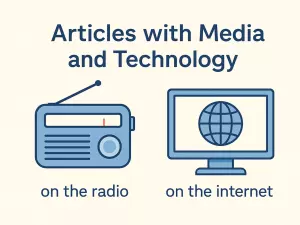
Articles with Media and Technology: on the radio, on the internet
This article explains when to use or omit articles with media terms like on the radio, on television, and on the internet. It covers new versus old media usage, special tech nouns, common mistakes, and includes practice sentences.
Previous
1
...
22
23
24
25
26
27
28
29
30
31
Next