Search the site
Search
Grammar ▾
▸ Articles
▸ Advanced Grammar
▸ Adjectives & Adverbs
▸ Conjunctions
▸ Conditionals
▸ Determiners
▸ Gerunds & Infinitives
▸ Grammar Practice
▸ Modal Verbs
▸ Nouns
▸ Parts of Speech
▸ Prepositions
▸ Pronouns
▸ Quantifiers
▸ Question Formation
▸ Reported Speech
▸ Verbs
Writing ▾
▸ Punctuation
▸ Sentence Structure
▸ Writing Mistakes
Vocabulary ▾
▸ Visual Vocabulary
▸ Food Vocabulary
▸ People Vocabulary
▸ Places Vocabulary
▸ Hobbies Vocabulary
▸ Home Vocabulary
▸ School Vocabulary
▸ Weather Vocabulary
▸ Basic Vocabulary
▸ General Vocabulary
Speaking ▾
▸ Conversational English
Calculators
Contacts
Home
»
English
»
Grammar
Grammar
This section focuses on English grammar explained in a simple and practical way. You will find clear rules, step-by-step examples, and common mistakes to avoid, helping you build a strong foundation for speaking and writing confidently.
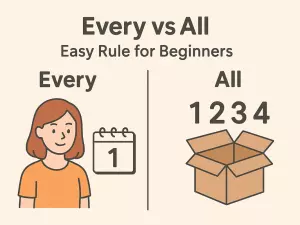
Every vs All: Easy Rule for Beginners
The article explains the differences between every and all, details their singular and plural usage, lists common collocations, highlights frequent mistakes, and provides practice sentences for rewriting to improve accuracy.
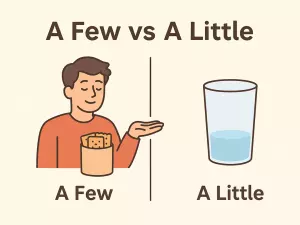
A Few vs A Little: Simple Visual Tip
The article reviews countable and uncountable nouns, clarifies the difference between few and little, discusses positive and negative feelings, compares a few vs few and a little vs little, points out common mistakes, and provides practice exercises.
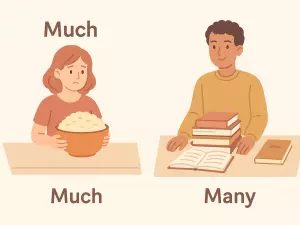
Much vs Many: Beginner Grammar Guide
This article explains when to use much, many, and their alternatives with countable and uncountable nouns. It covers simple rules, common mistakes, and includes a practice section to help you choose the correct quantifier.
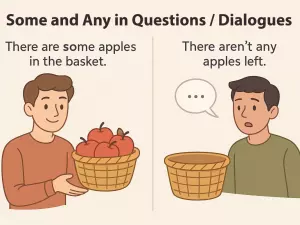
Some and Any in Questions and Dialogues
This article explains when to use some and any, covering their use in positive, negative, and question forms. It also discusses fixed expressions like something and anyone, and includes practice sentences for better understanding.
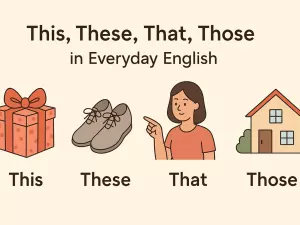
This, These, That, Those in Everyday English
This article explains demonstratives, showing how to use this and these for nearby objects and that and those for distant ones. It covers using demonstratives with nouns, highlights common mistakes, and includes a practice exercise.
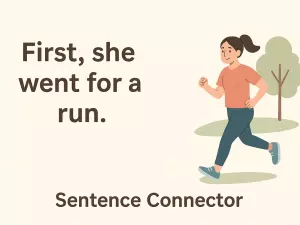
Useful Sentence Connectors for Beginners
This article explains what sentence connectors are and how to use them to add information, show contrast, and show cause in English. It provides examples in context and offers practice joining short sentences.
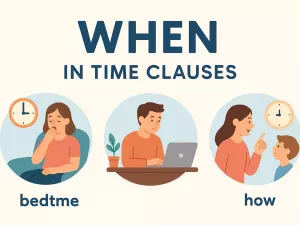
Using When in Time Clauses and Sentences
The article explains how time clauses work, compares the use of when, while, and as, and outlines tense agreement in time clauses. It also gives daily English examples and includes practice writing sentences with when.
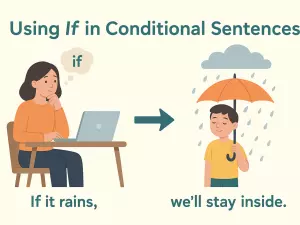
Using If in Conditional Sentences
This article explains conditional sentences, focusing on the zero and first conditionals. It covers when to use if or when, provides guidance on punctuation and word order, and includes practice exercises to complete sentences.
Using So for Results and Consequences
The article explains how to use so to connect actions and results, compares so with therefore and because, and clarifies correct sentence order. It also points out common mistakes and provides practice combining sentences with so.
Using Because to Give Reasons in Sentences
This article explains when to use because, its position in sentences, punctuation rules, and common mistakes such as confusing because with because of. It also provides real examples and practice sentences to help you use because correctly.
Previous
1
...
106
107
108
109
110
111
112
113
114
...
124
Next