Search the site
Search
Grammar ▾
▸ Articles
▸ Advanced Grammar
▸ Adjectives & Adverbs
▸ Conjunctions
▸ Conditionals
▸ Determiners
▸ Gerunds & Infinitives
▸ Grammar Practice
▸ Modal Verbs
▸ Nouns
▸ Parts of Speech
▸ Prepositions
▸ Pronouns
▸ Quantifiers
▸ Question Formation
▸ Reported Speech
▸ Verbs
Writing ▾
▸ Punctuation
▸ Sentence Structure
▸ Writing Mistakes
Vocabulary ▾
▸ Visual Vocabulary
▸ Food Vocabulary
▸ People Vocabulary
▸ Places Vocabulary
▸ Hobbies Vocabulary
▸ Home Vocabulary
▸ School Vocabulary
▸ Weather Vocabulary
▸ Basic Vocabulary
▸ General Vocabulary
Speaking ▾
▸ Conversational English
Calculators
Contacts
Home
»
English
»
Grammar
Grammar
This section focuses on English grammar explained in a simple and practical way. You will find clear rules, step-by-step examples, and common mistakes to avoid, helping you build a strong foundation for speaking and writing confidently.
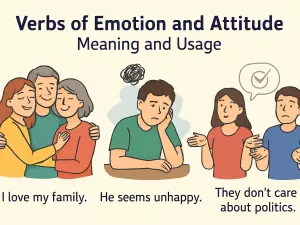
Verbs of Emotion and Attitude: Meaning and Usage
This article explains what emotion and attitude verbs express and lists common verbs for feelings and opinions. It shows object and clause patterns, gerunds vs infinitives, tone and strength, common learner mistakes, spoken usage, and homework practice tasks.
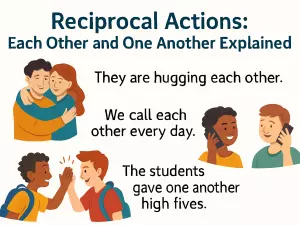
Reciprocal Actions: Each Other and One Another Explained
Learn what reciprocal actions are, how to use each other vs one another, which verbs, structures, and prepositions work, and when formal or informal fits. It also flags common learner mistakes, shows context, and ends with homework tasks.
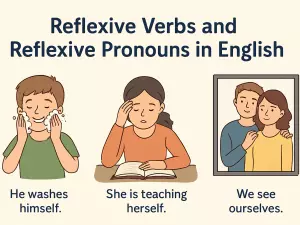
Reflexive Verbs and Reflexive Pronouns in English
Learn what reflexive pronouns are, which verbs need them, and common reflexive verb patterns. See how they add emphasis, compare reflexive vs non-reflexive meanings, fix typical mistakes, hear how they sound in speech, and do homework practice tasks.
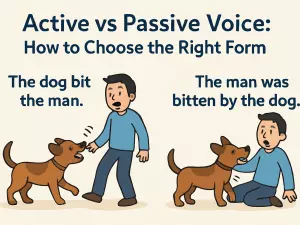
Active vs Passive Voice: How to Choose the Right Form
Learn the difference between active and passive voice, when each is preferred or sounds natural, and how focus shapes information flow. It also covers style in writing vs speech, common learner fixes, sentence transforms, and homework rewrites.
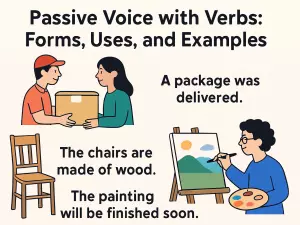
Passive Voice with Verbs: Forms, Uses, and Examples
This article explains what passive voice is, how to form it with be plus a past participle, when to use it, and how agents and by-phrases work. It covers passive across tenses, common mistakes, active vs passive meaning, and practice homework.
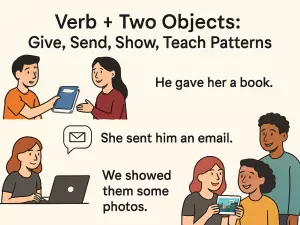
Verb + Two Objects: Give, Send, Show, Teach Patterns
Learn what two-object verbs are, how direct and indirect objects work, and when to use double-object vs prepositional forms. Covers common verbs, word order and pronouns, typical mistakes, plus homework practice tasks.
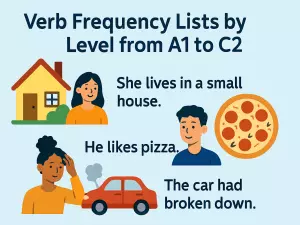
Verb Frequency Lists by Level from A1 to C2
This article explains verb frequency, starting with core verbs for beginners and how to expand your verb range at intermediate level.
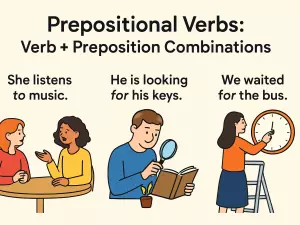
Prepositional Verbs: Verb + Preposition Combinations
Learn what prepositional verbs are and how they differ from phrasal verbs. See common verb–preposition pairs, how meaning shifts with different prepositions, and object placement. Finish with mistakes to fix, learning tips, and homework practice.
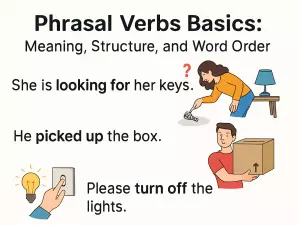
Phrasal Verbs Basics: Meaning, Structure, and Word Order
Learn what phrasal verbs are, how verb + particle works, and how meanings can be literal or idiomatic. Covers separable vs inseparable patterns, pronoun placement, beginner examples, common mistakes, and basic homework practice.
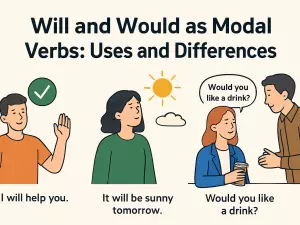
Will and Would as Modal Verbs: Uses and Differences
This article explains the basic meanings of will and would, including future predictions and decisions, requests and offers, and past habits with would.
Previous
1
...
13
14
15
16
17
18
19
20
21
...
124
Next