Search the site
Search
Grammar ▾
▸ Articles
▸ Advanced Grammar
▸ Adjectives & Adverbs
▸ Conjunctions
▸ Conditionals
▸ Determiners
▸ Gerunds & Infinitives
▸ Grammar Practice
▸ Modal Verbs
▸ Nouns
▸ Parts of Speech
▸ Prepositions
▸ Pronouns
▸ Quantifiers
▸ Question Formation
▸ Reported Speech
▸ Verbs
Writing ▾
▸ Punctuation
▸ Sentence Structure
▸ Writing Mistakes
Vocabulary ▾
▸ Visual Vocabulary
▸ Food Vocabulary
▸ People Vocabulary
▸ Places Vocabulary
▸ Hobbies Vocabulary
▸ Home Vocabulary
▸ School Vocabulary
▸ Weather Vocabulary
▸ Basic Vocabulary
▸ General Vocabulary
Speaking ▾
▸ Conversational English
Calculators
Contacts
Home
»
English
»
Grammar
Grammar
This section focuses on English grammar explained in a simple and practical way. You will find clear rules, step-by-step examples, and common mistakes to avoid, helping you build a strong foundation for speaking and writing confidently.
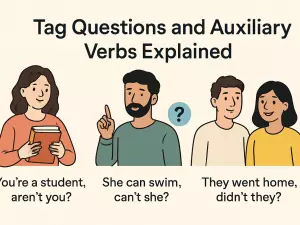
Tag Questions and Auxiliary Verbs Explained
Learn what tag questions are used for and how to form them, including positive and negative patterns and choosing the right auxiliary. It also covers how intonation affects meaning, common irregular tags, typical learner mistakes, and homework practice tasks.
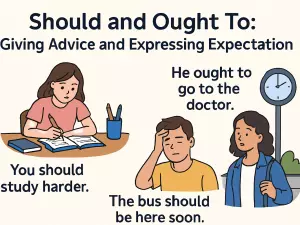
Should and Ought To: Giving Advice and Expressing Expectation
Explains the basic meaning of should and ought to, how to use them for advice, recommendations, expectations, and probability, plus negatives and questions. Covers should have for past advice, modern ought to vs should, common errors, and practice homework tasks.
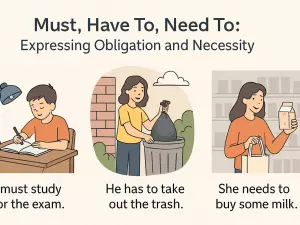
Must, Have To, Need To: Expressing Obligation and Necessity
This article explains types of obligation and necessity, including must vs have to and internal vs external rules. It covers need to and lack of necessity, negatives and questions, past and future forms, common learner confusions with fixes, and homework practice tasks.
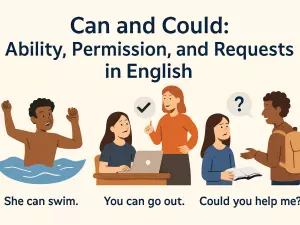
Can and Could: Ability, Permission, and Requests in English
Covers the basic meanings of can and could, how they show present and past ability, polite permission, and everyday requests. It also explains could for indirect speech, negatives and questions, common mistakes, and homework practice tasks.
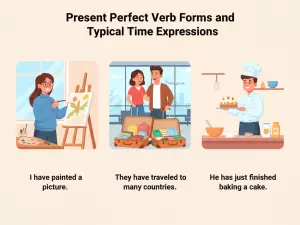
Present Perfect Verb Forms and Typical Time Expressions
This article explains what the present perfect expresses and how to form it with have/has plus a past participle.
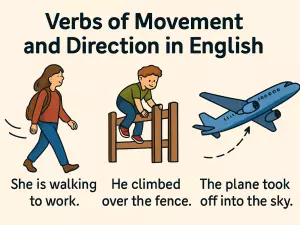
Verbs of Movement and Direction in English
The article explains what movement and direction verbs express, with common motion verbs, direction and path expressions, and verb + preposition combinations.
Past Continuous with Verbs: Background Actions and Timing
This article explains how the Past Continuous tense is used to describe background actions in the past, how to form it with was and were plus -ing, how it works with when and while, how it differs from Past Simple, and how to avoid common learner mistakes.
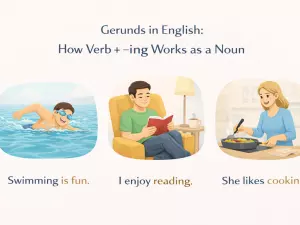
Gerunds in English: How Verb + -ing Works as a Noun
This article explains what gerunds are, how they work as subjects and objects, which verbs and prepositions take them, and how to tell them apart from present participles and infinitives. It also fixes common mistakes and includes homework practice.
Infinitive with To: Form, Meaning, and Common Uses
Learn what the to-infinitive is, how to form it and make negatives, and which verbs take it. See it after adjectives and nouns, use it for purpose and result, compare it with the bare infinitive, fix common mistakes, and do homework exercises.
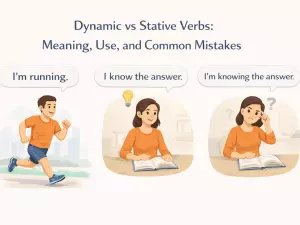
Dynamic vs Stative Verbs: Meaning, Use, and Common Mistakes
Explains the core difference between dynamic and stative verbs, why many statives don’t use the continuous, and the main stative categories.
Previous
1
...
14
15
16
17
18
19
20
21
22
...
124
Next