Search the site
Search
Grammar ▾
▸ Articles
▸ Advanced Grammar
▸ Adjectives & Adverbs
▸ Conjunctions
▸ Conditionals
▸ Determiners
▸ Gerunds & Infinitives
▸ Grammar Practice
▸ Modal Verbs
▸ Nouns
▸ Parts of Speech
▸ Prepositions
▸ Pronouns
▸ Quantifiers
▸ Question Formation
▸ Reported Speech
▸ Verbs
Writing ▾
▸ Punctuation
▸ Sentence Structure
▸ Writing Mistakes
Vocabulary ▾
▸ Visual Vocabulary
▸ Food Vocabulary
▸ People Vocabulary
▸ Places Vocabulary
▸ Hobbies Vocabulary
▸ Home Vocabulary
▸ School Vocabulary
▸ Weather Vocabulary
▸ Basic Vocabulary
▸ General Vocabulary
Speaking ▾
▸ Conversational English
Calculators
Contacts
Home
»
English
»
Grammar
Grammar
This section focuses on English grammar explained in a simple and practical way. You will find clear rules, step-by-step examples, and common mistakes to avoid, helping you build a strong foundation for speaking and writing confidently.
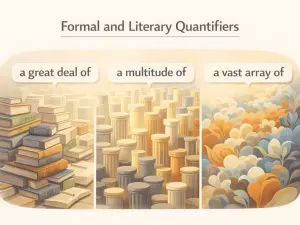
Formal and Literary Quantifiers: Tone, Context, and Usage
Here we what makes quantifiers formal or literary, where they are commonly used, their impact on tone, how they differ from neutral forms, frequent literary examples, risks of overuse, and offers practice on choosing the right style.
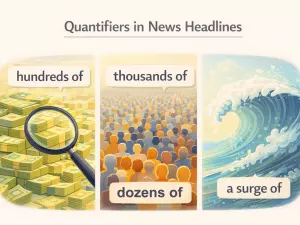
How Quantifiers Are Used in Headlines and News Writing
Here we how quantifiers create emphasis and clarity in news headlines, covers typical quantifier choices and the omission of articles, compares headlines to full articles, and provides practice rewriting headlines using quantifiers.
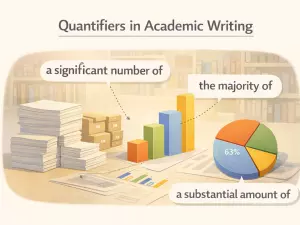
Quantifiers in Academic and Formal Writing: Style and Precision
Here we the importance of precise quantification in academic writing, outlines preferred and inappropriate quantifiers, and explains how to balance clarity with caution.
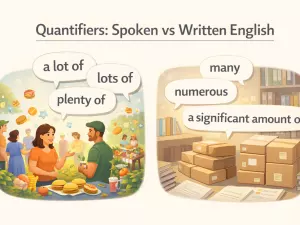
Quantifiers in Spoken English vs Written English Compared
Here we how English quantifiers differ in speech and writing, identifies those favored in each context, examines formality and register shifts, highlights common learner mistakes, and provides examples and practice for adapting quantifiers appropriately.
Less and More with Abstract Nouns: Meaning and Grammar Rules
Here we what abstract nouns are, why less and more are used with them, common examples, how meaning changes with less or more, typical sentence patterns, frequent learner errors, context-based examples, and practice choosing the right word.
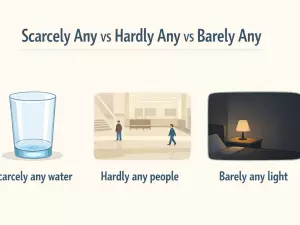
Scarcely Any vs Hardly Any vs Barely Any: Usage Explained
Here we how scarcely any, hardly any, and barely any convey scarcity, highlights their tone and sentence placement, compares their use with different nouns and in formal or neutral contexts, and provides examples and practice for clarity.
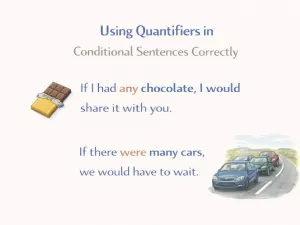
Using Quantifiers in Conditional Sentences Correctly
Here we how quantifiers impact the meaning of conditional sentences, covering their placement in if-clauses and result clauses, effects on real and unreal conditions, logical interpretation, common mistakes, style differences, and practice exercises.
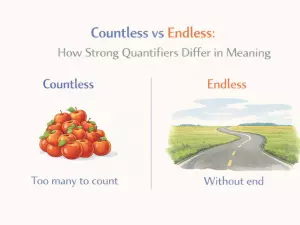
Countless vs Endless: How Strong Quantifiers Differ in Meaning
The article clarifies the core meanings of countless and endless, contrasts quantity with continuity, lists common noun pairings, discusses emotional nuances, shows when substitution fails, and offers examples and practice for choosing the right quantifier.
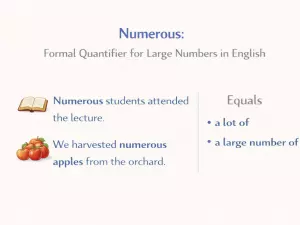
Numerous: Formal Quantifier for Large Numbers in English
Here we how numerous compares to other large-quantity words, what nouns it typically modifies, and where it sounds natural. It also explains its register, grammar patterns, common mistakes, alternatives, and provides usage examples and practice.
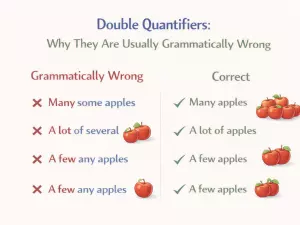
Double Quantifiers: Why They Are Usually Grammatically Wrong
The article defines double quantifiers, explains why English avoids them, highlights typical mistakes and their causes, distinguishes emphasis from errors, presents rare acceptable cases, and provides guidance and practice for correcting double quantifier usage.
Previous
1
...
26
27
28
29
30
31
32
33
34
...
124
Next