Search the site
Search
Grammar ▾
▸ Articles
▸ Advanced Grammar
▸ Adjectives & Adverbs
▸ Conjunctions
▸ Conditionals
▸ Determiners
▸ Gerunds & Infinitives
▸ Grammar Practice
▸ Modal Verbs
▸ Nouns
▸ Parts of Speech
▸ Prepositions
▸ Pronouns
▸ Quantifiers
▸ Question Formation
▸ Reported Speech
▸ Verbs
Writing ▾
▸ Punctuation
▸ Sentence Structure
▸ Writing Mistakes
Vocabulary ▾
▸ Visual Vocabulary
▸ Food Vocabulary
▸ People Vocabulary
▸ Places Vocabulary
▸ Hobbies Vocabulary
▸ Home Vocabulary
▸ School Vocabulary
▸ Weather Vocabulary
▸ Basic Vocabulary
▸ General Vocabulary
Speaking ▾
▸ Conversational English
Calculators
Contacts
Home
»
English
»
Grammar
Grammar
This section focuses on English grammar explained in a simple and practical way. You will find clear rules, step-by-step examples, and common mistakes to avoid, helping you build a strong foundation for speaking and writing confidently.
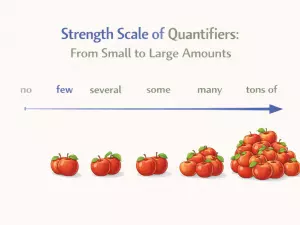
Strength Scale of Quantifiers: From Small to Large Amounts
Here we how quantifiers work as a scale, how to rank them by strength, and why their meanings can overlap or shift with context. It covers common mistakes, visual tools for comparison, and offers practice with real-life examples.
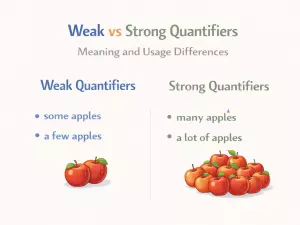
Weak vs Strong Quantifiers: Meaning and Usage Differences
Here we what makes quantifiers weak or strong, how this influences a speaker’s attitude and emphasis, typical examples, contextual and register differences, frequent learner errors, and provides real-life comparisons and practice exercises.
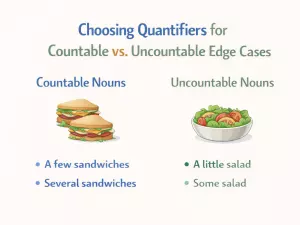
Choosing Quantifiers for Countable vs Uncountable Edge Cases
Here we what makes a noun an edge case, how some nouns shift between countable and uncountable forms depending on context, meaning changes based on noun type, common learner mistakes, and includes examples and practice for deciding correct usage.
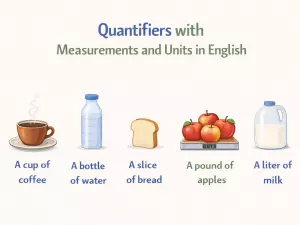
Quantifiers with Measurements and Units in English
Here we how measurements are used as quantities in English, differences between units and counted items, common quantifiers, number and unit agreement, expressing exact and approximate amounts, frequent learner mistakes, real-life examples, and practice…
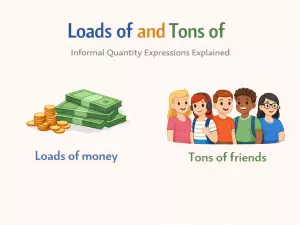
Loads of and Tons of: Informal Quantity Expressions Explained
Here we the informal phrases loads of and tons of, their subtle differences, typical nouns they pair with, and how they're used in speech and writing. It also addresses when not to use them, common learner mistakes, and includes practice examples.
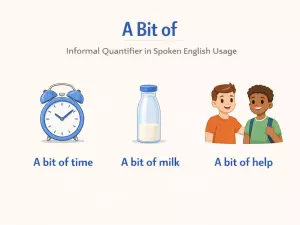
A Bit of: Informal Quantifier in Spoken English Usage
This article explains the meaning of a bit of, its casual tone, and how it’s used with uncountable or abstract nouns. It covers common collocations, differences from a little, sentence placement, and tips for natural, everyday use.
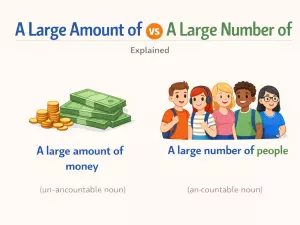
A Large Amount of vs A Large Number of Explained
This article explains the key difference between 'a large amount of' for uncountable nouns and 'a large number of' for countable nouns. It covers usage, common errors, sentence structure, verb agreement, and practice choosing the correct form.
A Great Deal of: Formal Quantifier for Uncountable Nouns
Here we the meaning and intensity of 'a great deal of,' its restriction to uncountable nouns, tone, formality, typical contexts, correct grammar, comparison with similar quantifiers, common mistakes, usage examples, and practice tips.
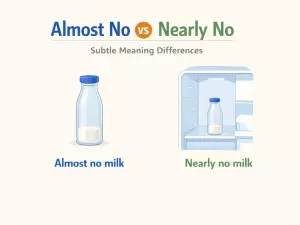
Almost No vs Nearly No: Subtle Meaning Differences
Here we the core meaning of near-zero quantity, differences in emphasis and tone between almost no and nearly no, their sentence position, usage with countable and uncountable nouns, frequent learner mistakes, clear contrasting examples, and practice…
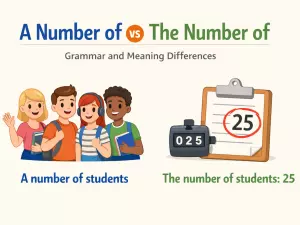
A Number of vs The Number of: Grammar and Meaning Differences
The article compares a number of and the number of, showing how each affects verb agreement and meaning. It covers their use in writing, common patterns, typical mistakes, and includes practice to help learners choose the correct phrase.
Previous
1
...
27
28
29
30
31
32
33
34
35
...
124
Next