Search the site
Search
Grammar ▾
▸ Articles
▸ Advanced Grammar
▸ Adjectives & Adverbs
▸ Conjunctions
▸ Conditionals
▸ Determiners
▸ Gerunds & Infinitives
▸ Grammar Practice
▸ Modal Verbs
▸ Nouns
▸ Parts of Speech
▸ Prepositions
▸ Pronouns
▸ Quantifiers
▸ Question Formation
▸ Reported Speech
▸ Verbs
Writing ▾
▸ Punctuation
▸ Sentence Structure
▸ Writing Mistakes
Vocabulary ▾
▸ Visual Vocabulary
▸ Food Vocabulary
▸ People Vocabulary
▸ Places Vocabulary
▸ Hobbies Vocabulary
▸ Home Vocabulary
▸ School Vocabulary
▸ Weather Vocabulary
▸ Basic Vocabulary
▸ General Vocabulary
Speaking ▾
▸ Conversational English
Calculators
Contacts
Home
»
English
»
Grammar
Grammar
This section focuses on English grammar explained in a simple and practical way. You will find clear rules, step-by-step examples, and common mistakes to avoid, helping you build a strong foundation for speaking and writing confidently.
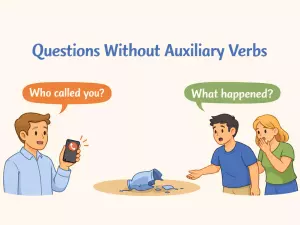
Questions Without Auxiliary Verbs: Rules and Examples
This article explains questions in English that do not use auxiliary verbs, focusing on subject questions. It covers when auxiliaries are omitted, key question words, word order, common mistakes, and includes practice exercises.
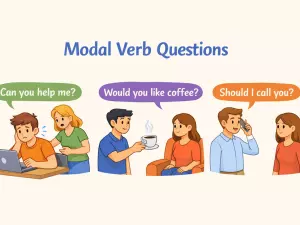
Questions with Modal Verbs in English: Rules and Examples
Here we how to form questions with modal verbs in English, including yes/no and WH-questions, their meanings, politeness, certainty, and negative forms. It also highlights common learner mistakes and provides practice exercises.
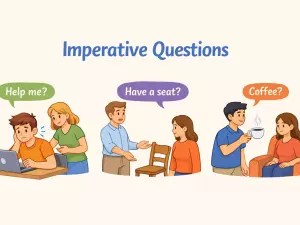
Imperative Questions in English: Requests and Offers
This article explains how imperatives become questions in English, focusing on requests and offers. It covers politeness strategies, intonation, formal and informal usage, common mistakes, and provides practice exercises for self-assessment.
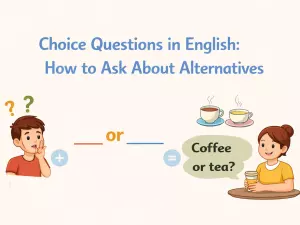
Choice Questions in English: How to Ask About Alternatives
This article explains what choice questions are, how they are structured, and how to use or and proper intonation. It also compares them to yes/no questions, covers short answers, common mistakes, and includes practice exercises.
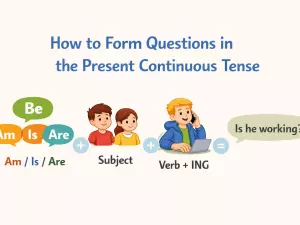
How to Form Questions in the Present Continuous Tense
Here we how to form present continuous questions, including am/is/are with -ing verbs, yes/no and WH-questions, and time expressions. It also compares present simple and continuous questions, highlights common mistakes, and offers practice.
How to Form Questions in the Present Simple Tense
This article explains present simple question structure, when to use do or does, how to form yes/no and WH-questions, and the difference between using be and other verbs. It also covers adverbs, common mistakes, and offers practice exercises.
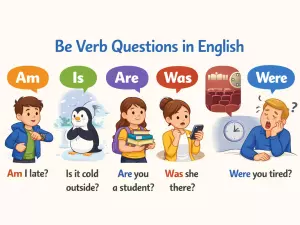
Be Verb Questions in English: Am, Is, Are, Was, Were
Here we how to make questions using the be verb in both present and past tenses. It explains yes/no and WH-questions, short answers, common mistakes, and provides exercises for practice and self-assessment.
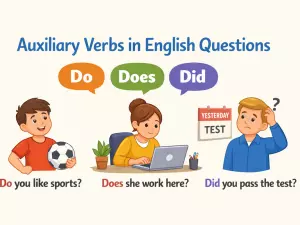
Auxiliary Verbs in English Questions: Do, Does, Did
Here we the use of auxiliary verbs do, does, and did in forming questions, explains both yes/no and WH-question structures, highlights common mistakes learners make, and provides practice exercises with self-checks for improvement.
Questions with Have and Have Got: Rules and Examples
The article explains how to use have and have got, form questions with do/does and have got, and notes British versus American usage. It covers yes/no and WH-questions, short answers, common mistakes, and offers practice exercises for self-check.
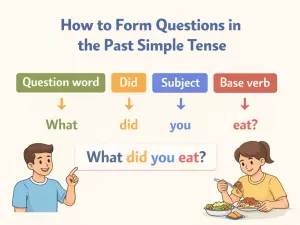
How to Form Questions in the Past Simple Tense
Here we how to form past simple questions, including using did, yes/no and WH-questions, and handling regular and irregular verbs. It also discusses time expressions, common mistakes, and offers practice exercises to check your understanding.
Previous
1
...
24
25
26
27
28
29
30
31
32
...
124
Next