Search the site
Search
Grammar ▾
▸ Articles
▸ Advanced Grammar
▸ Adjectives & Adverbs
▸ Conjunctions
▸ Conditionals
▸ Determiners
▸ Gerunds & Infinitives
▸ Grammar Practice
▸ Modal Verbs
▸ Nouns
▸ Parts of Speech
▸ Prepositions
▸ Pronouns
▸ Quantifiers
▸ Question Formation
▸ Reported Speech
▸ Verbs
Writing ▾
▸ Punctuation
▸ Sentence Structure
▸ Writing Mistakes
Vocabulary ▾
▸ Visual Vocabulary
▸ Food Vocabulary
▸ People Vocabulary
▸ Places Vocabulary
▸ Hobbies Vocabulary
▸ Home Vocabulary
▸ School Vocabulary
▸ Weather Vocabulary
▸ Basic Vocabulary
▸ General Vocabulary
Speaking ▾
▸ Conversational English
Calculators
Contacts
Home
»
English
»
Grammar
Grammar
This section focuses on English grammar explained in a simple and practical way. You will find clear rules, step-by-step examples, and common mistakes to avoid, helping you build a strong foundation for speaking and writing confidently.
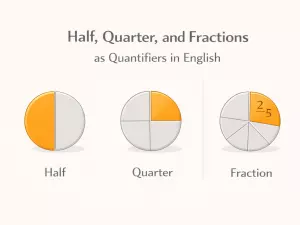
Half, Quarter, and Fractions as Quantifiers in English
Here we how fractions work as quantifiers in English, their use with both countable and uncountable nouns, differences between precise and approximate meanings, sentence patterns, common expressions, typical learner mistakes, and practical examples.
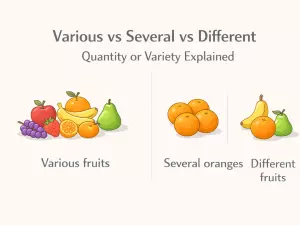
Various vs Several vs Different: Quantity or Variety Explained
Here we the core meanings of various, several, and different, compares their focus on number versus diversity, shows typical nouns and sentence patterns, explains subtle meaning shifts, common learner confusion, and gives clear examples and practice.
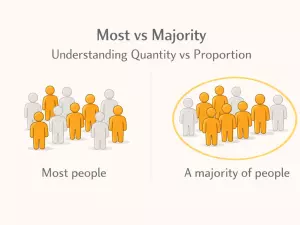
Most vs Majority: Understanding Quantity vs Proportion
Here we the difference between grammatical quantifiers and noun forms, explains how most and majority are used with nouns and verbs, highlights contexts where they can't be substituted, and provides examples and practice to avoid common mistakes.
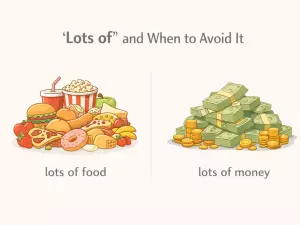
Lots of: Informal Quantifier and When to Avoid It
Here we the informal phrase lots of, showing where it fits in casual speech, when it is inappropriate, and suggesting formal alternatives. It also explains its use with different nouns, common learner errors, and provides practice replacing it.
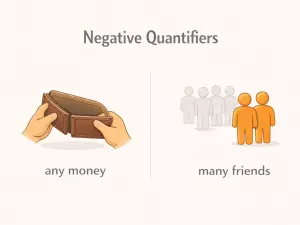
Quantifiers in Negative Sentences: Common Learner Errors
Here we how negation changes quantifier meaning, common negative sentence patterns, issues with double negatives, use of much, many, and any in negatives, word order problems, typical learner errors, and provides examples with practice corrections.
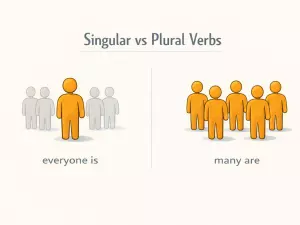
Quantifiers with Singular vs Plural Verbs Explained
Here we how quantifiers affect verb agreement, identifies which quantifiers use singular or plural verbs, explores context-dependent and collective cases, points out common learner mistakes, and provides examples and practice with correcting agreement.
Using Quantifiers with Collective Nouns Correctly
This article explains what collective nouns mean in English, how they take singular or plural verbs, which quantifiers fit them, and how British and international usage differ. It also covers common errors and offers examples and practice.
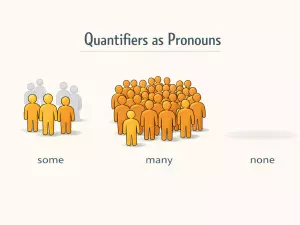
Quantifiers Used Without Nouns: Pronoun Usage Explained
Here we how quantifiers can fully replace nouns, distinguishes between their pronoun and determiner uses, lists common standalone quantifiers, discusses context and clarity, explains singular and plural meanings, highlights common learner mistakes, and…
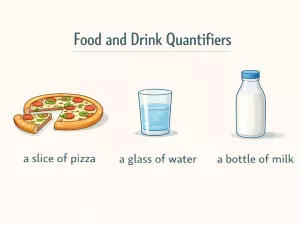
Quantifiers with Food, Drinks, and Containers Explained
The article explains why food and drinks need container quantifiers, reviews common container nouns, shows their use in real-life contexts and menus, clarifies food items versus substances, highlights learner errors, and provides practice choosing the right quantifier.
Plenty of vs A Lot of: Natural Usage in Modern English
The article compares plenty of and a lot of, covering their meanings, tone, and usage in different contexts. It explains which is more positive or neutral, how they fit spoken and written English, and offers practice choosing the most natural option.
Previous
1
...
28
29
30
31
32
33
34
35
36
...
124
Next